Prints from old negatives are new paper photographs made with the original film as their source. Ordering them differs from general archive digitisation because the intended result has a particular physical size, surface and composition. The correct frame must be identified, its condition assessed and its relationship to the print proportions agreed. Panorama Studio has been based in Volos since 1989 and reviews each older negative before recommending an output.
Identifying the required picture
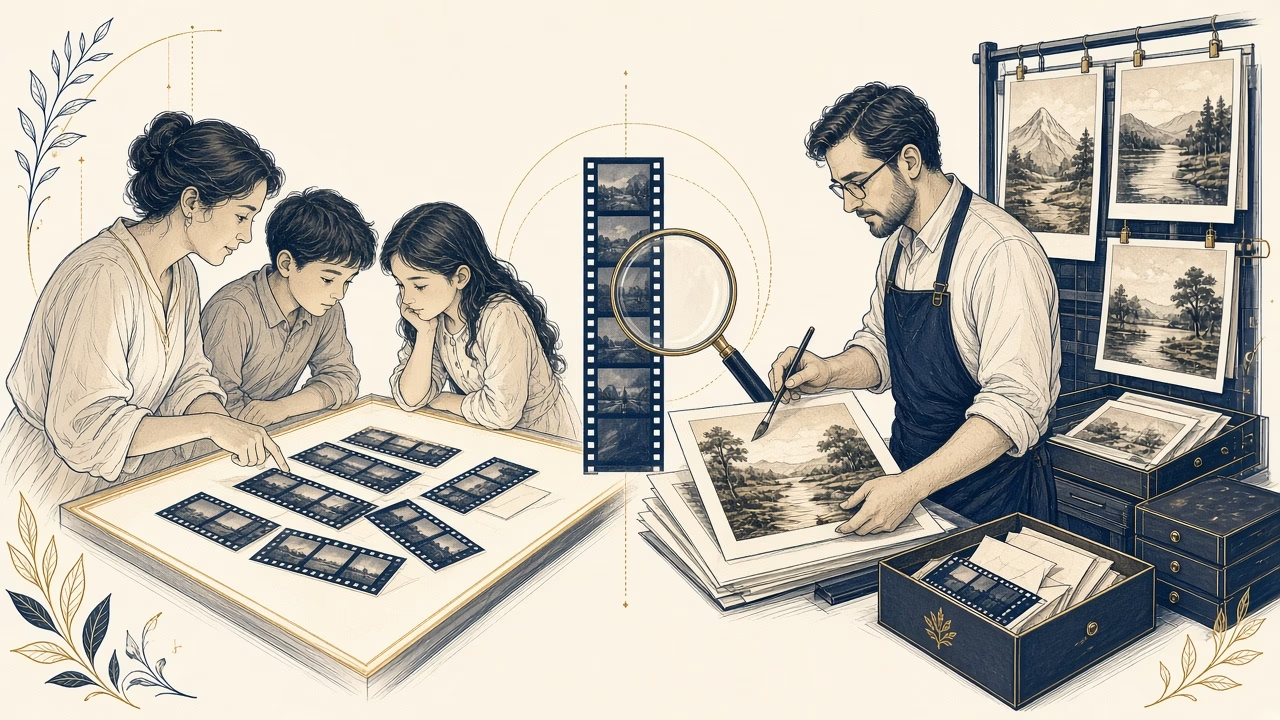
A negative is small and tonally reversed, so choosing by eye is not always reliable. Keep strips in their sleeves and use edge numbers, strip position and an envelope code. If an old print shows the desired scene, bring it as a visual reference. It does not need to be in excellent condition to help identify the source exposure.
Where many exposures look alike, a contact-style index or other previews can support selection. These references are identification tools rather than final products. Mark each choice with a precise code instead of phrases such as “the good wedding picture”. A systematic reference reduces the risk that a neighbouring frame will be printed accidentally.
Print dimensions and aspect ratio
The negative’s shape does not always match the chosen paper shape. A print may crop part of the edges, or retain the whole image with borders. This decision should be deliberate, particularly where people, signs or objects sit close to the frame boundary. Ask to discuss composition before finalising an order rather than discovering an unwanted crop afterwards.
Larger is not automatically better. Genuine detail depends on focus, camera movement, exposure and film condition. Assessment connects the source with a realistic viewing size. Enlarging beyond the recorded content makes grain and limitations more obvious but cannot add authentic detail. Intended display distance and location also matter when considering dimensions.
Colour, contrast and ageing film
Older colour negatives may show changes in their coloured base or uneven density. A fresh print can be balanced for a readable, coherent appearance, but fully recreating lost dye information cannot be guaranteed. With black-and-white sources, contrast choices affect how much information remains visible in bright and dark parts of the scene.
A small historic photograph may look different from a new output made from the same negative. Original laboratory decisions, paper, ageing and the new dimensions all affect comparison. The earlier print is a useful preference reference rather than conclusive evidence of one uniquely correct colour interpretation.
Reprints and consistent ordering
If more copies might be needed, keep the exact frame code, dimensions, crop and agreed choices. A repeat order is clearer when based on recorded specifications instead of memory. Sets for several relatives can be organised by recipient without altering the source identity, ensuring everyone refers to the same exposure.
Small differences can occur when an order is repeated much later or with another output request. Retaining an agreed digital master may provide a consistent production basis. That does not mean the film should be discarded: the negative remains the physical original and may support future decisions not anticipated today.
Handling and preserving negatives
Hold strips by their edges and never rub them with paper or cloth. Do not cut an uncut roll or pull apart material that appears stuck. Use sleeves that separate image surfaces and place all notes outside the film area. On completion, check returned groups against the intake inventory before putting them back into storage.
A digital file can also be requested with a print for access or later use. Define its purpose, because a selection preview is not equivalent to a master. For whole-archive conversion, see negative digitisation; technical capture is discussed in negative film scanning. Mounted positive transparencies belong under slide digitisation.
Frequently asked questions
How do I find the negative I want?
Combine its sleeve code, strip number and frame position. An old photograph or preview image can help distinguish exposures whose composition differs only in facial expression or a small movement.
What is a contact-style preview?
It is an index of small positive images used to recognise frames. It supports informed selection and does not necessarily represent the detail, colour or finish of the final paper output.
Will part of my picture be cropped?
That depends on negative and paper proportions. Either a crop or a complete image with borders can be chosen after important details near every edge have been checked.
Which print size should I choose?
Dimensions follow real recorded detail, intended use and viewing distance. The particular negative’s sharpness, exposure and condition should be reviewed before a substantial enlargement is recommended.
Will colour match my old photograph?
Not necessarily, because a historic print and its negative age differently. The sample communicates your preference, while surviving film information determines what can credibly be produced now.
Can contrast be made much stronger?
It can be adjusted, but excess contrast hides information in light or dark areas. A measured choice should suit the scene rather than merely creating an immediately dramatic appearance.
Can I order another copy later?
Yes, especially when frame code and prior specifications are retained. Recording paper dimensions and cropping decisions makes a future order clearer and supports a more consistent result.
Should I clean negatives before delivery?
Do not use household methods. Submit them as found and identify water exposure, mould, stuck surfaces or severe scratches so that safe handling can be assessed before work begins.
Should I keep film after receiving prints?
Yes. It is the primary physical source and may be required for another size or future use. Return it to organised enclosures in a stable, dry storage environment.
May I receive a digital file too?
Yes, if included in the agreed order. Explain whether it is intended for simple sharing, preservation or later production, as those goals call for different deliverable files.
Order from a clearly identified frame
Review our film developing and digitisation service, then contact Panorama Studio in Volos. Bring negatives in their sleeves, any old reference print, and details of required copies, dimensions and intended display.