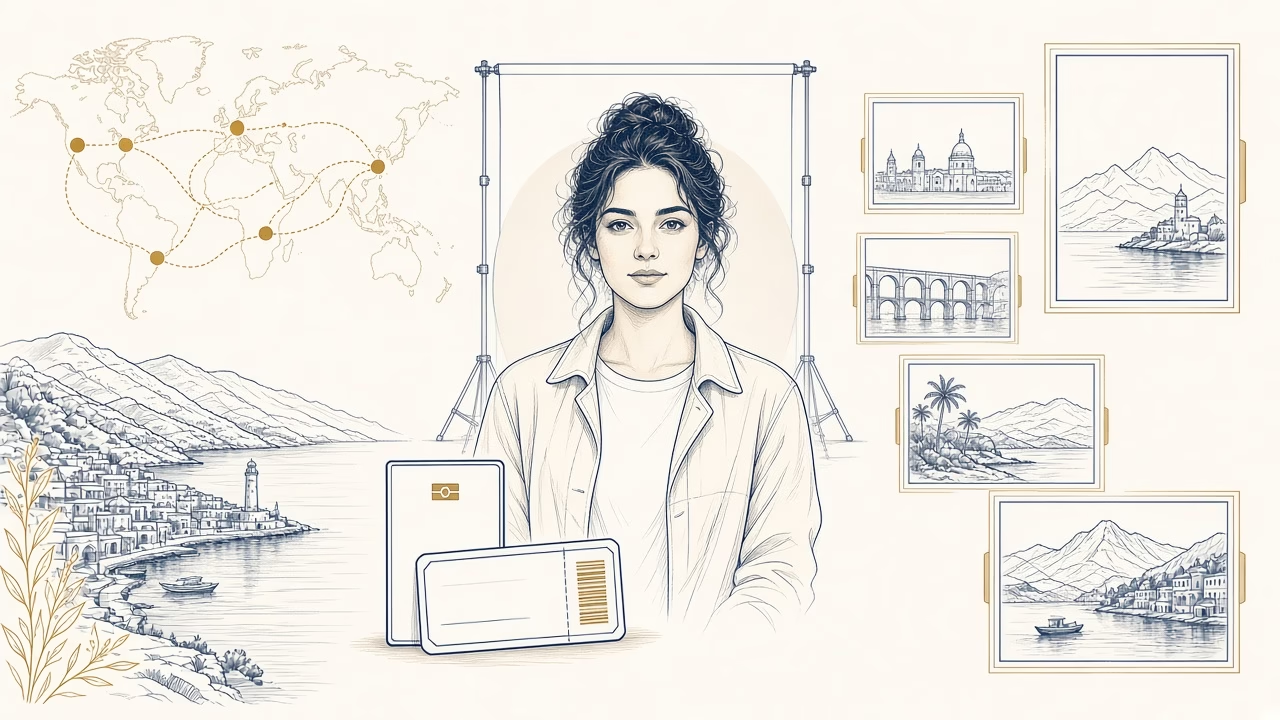
There is no single “visa photograph” that works for every country. Requirements depend on the destination, visa category, submission route, applicant’s age and often the particular consulate or application centre. Even for one country, an online application may require a different file from the photograph presented at an in-person appointment. The safest starting point is therefore the current written instruction issued by the official body handling your case.
At Panorama Studio in Volos, good preparation begins before the camera is used. Tell us the country, exact visa category and whether you will apply online, at an embassy or consulate, or through an external application centre. Bring the confirmation email, link or sample you received. This allows the session to be based on real instructions rather than a general recollection of “passport photos”.
Five points to verify
- Country and category: visitor, student, work, settlement or another route may have its own framework.
- Delivery method: prints, a digital file, direct upload to an application, or a combination.
- Dimensions and composition: print or pixel size, eye position, head scale and margins.
- Background and appearance: background colour, expression, spectacles, head coverings and clothing.
- Date of capture: how recent it must be and whether identical copies are required.
Save the official page or email and bring the complete text, not a cropped screenshot showing only dimensions. Instructions often contain additional rules for head height, JPEG format, file weight, resolution or acceptable print quality. If the wording is unclear, ask the receiving authority for clarification before commissioning the photograph.
Schengen: a common size, not a blind rule
Many Schengen applications use a 35 × 45 mm printed photograph. This is a useful reference point, not a universal promise. Applicants must check the current instructions from the embassy, consulate or authorised centre receiving their particular application. Confirm the number of copies, the permitted age of the photograph and whether a separate biometric procedure will take place at the appointment.
Do not rely solely on advice from a previous trip. Requirements, suppliers and submission portals can change. A family member applying under another category may also receive a different checklist. The document attached to your own current booking should guide production.
United States and China
The United States has distinct specifications that should not be converted casually into a European 35 × 45 mm photograph. The required format can also depend on whether the application needs a digital upload or a print. Read our focused guide to US visa photograph requirements, then compare it with the latest official instructions for your particular application.
China likewise sets its own rules for dimensions, composition and digital files. Do not use a photograph made for another destination because it “looks the same”. Our separate guide to Chinese visa photographs in Volos provides a practical introduction, but the service receiving your application remains the final reference.
Printed versus digital photographs
A printed photograph is assessed as a physical product: actual dimensions, paper quality, clean cutting, colour rendering and freedom from marks. Do not trim, staple or glue it yourself unless the instructions specifically tell you to do so. Keep copies clean, flat and protected until submission, and avoid writing on the front or allowing fingerprints to mark the surface.
A digital file faces different checks: pixel dimensions, aspect ratio, format, maximum or minimum file weight and compression. An image that prints correctly may still fail an online portal. Do not send it through an application that automatically compresses photographs, and do not apply filters or artificial enhancement. Request the file in the exact form described by the authority and retain an unchanged original copy.
Appearance and capture
Most official guides ask for a frontal pose, unobstructed face and natural expression, but details differ. Choose simple clothing that contrasts with the specified background. Keep hair away from the eyes and important features. Spectacles may be prohibited or may cause reflections, so read the destination’s instruction. For a religious head covering or a medical exception, consult the official text and bring any supporting evidence it expressly requires.
Avoid assuming that professional retouching means cosmetic alteration. Correct preparation can manage crop, exposure and file delivery, but identifying features and natural skin texture must remain faithful. If your appearance has changed markedly since a previous photograph, arrange a new capture rather than recycling an old file merely because it has the right dimensions.
Children and family applications
Do not assume that every family member has an identical requirement. Babies need a clear individual image without an adult’s hands, toys or dummy, although some authorities publish age-specific allowances. Check each application separately. Allow enough time, bring children when rested and avoid clothing or accessories that hide the neck and facial outline.
When several people are applying, label requirements by applicant and route. Keeping each set or file clearly identified reduces the chance of uploading the wrong image. Never rename or resize files casually if the application instructions prescribe a naming format or technical limit.
A practical decision sequence
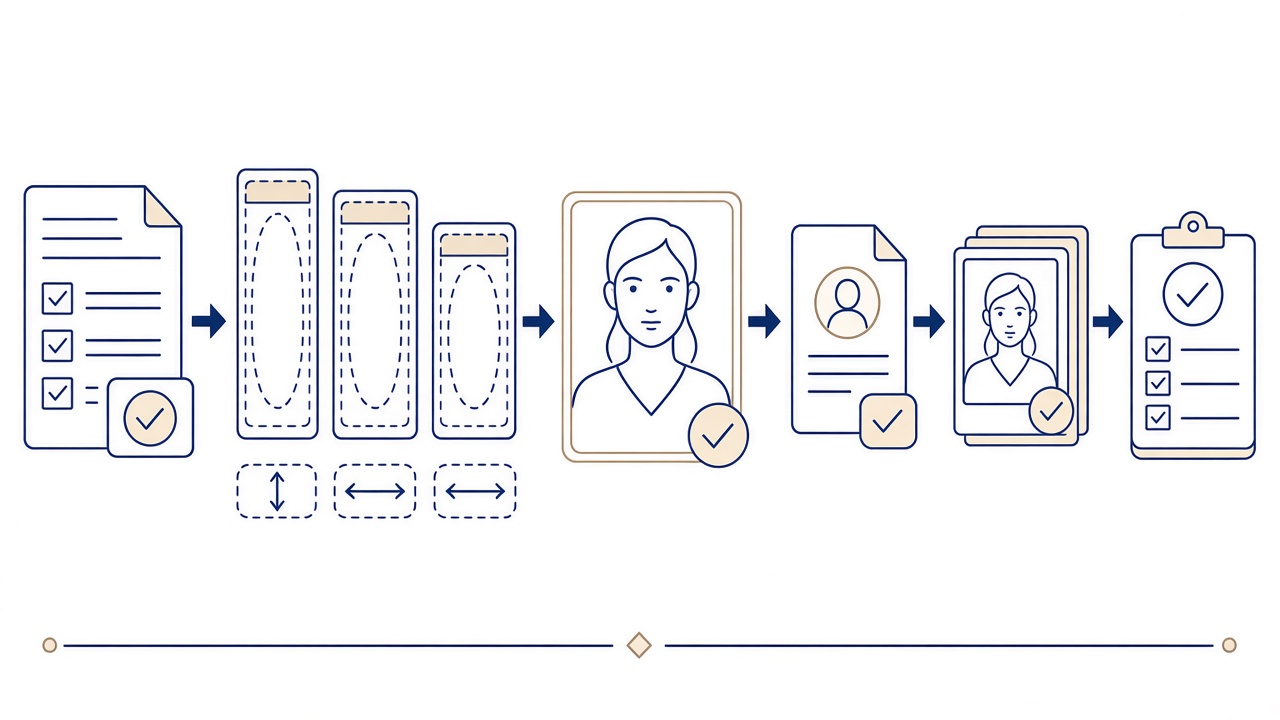
- Open the current official checklist linked to your application or appointment.
- Identify whether the request concerns a print, upload or both.
- Send the complete specification to the studio before attending if it is unusual.
- At collection, keep digital files unchanged and prints protected.
- Run the portal’s own checks early enough to seek help before the deadline.
If an online system rejects a file, record the exact error rather than repeatedly modifying the image. Messages about pixel dimensions, file size or face detection point to different issues. Share the precise wording with the studio, while remembering that only the authority can decide whether a submission is acceptable.
Frequently asked questions
What is the universal visa photograph size?
There is none. The destination, application category and submission route determine the specification.
Do all Schengen applications require 35 × 45 mm?
It is common, but must be confirmed against current instructions from the embassy, consulate or application centre.
Can I use the same photograph for the US and Schengen?
Do not assume so. The US has distinct requirements, and your application may need a different composition or file.
Is naming the country enough?
Not always. Give the visa category, receiving body and whether you need a print or digital upload.
Which instructions should I bring?
Bring the complete official link, email or form so dimensions, background, composition and file rules can all be checked.
Can I send the digital file through a messaging app?
Avoid doing so if the app compresses images. Changed dimensions or quality may make the file unsuitable.
Are filters and cosmetic retouching allowed?
Not where they alter natural appearance or identifying features. Follow the destination’s express rule.
What are the rules for spectacles?
Rules vary, and glare is problematic. Check the official instructions before capture.
Do children need their own photograph?
Yes. Every applicant needs the image specified for their application, including any age-specific guidance.
Does the correct size guarantee acceptance?
No. Composition, quality, recency and the complete application are also assessed. Final acceptance rests with the relevant authority.
Prepare the correct visa photograph in Volos
Bring or send your application’s official instructions to Panorama Studio, serving Volos since 1989. Contact us with the country, category and submission route. We prepare the image around the information supplied; final acceptance remains with the competent authority.