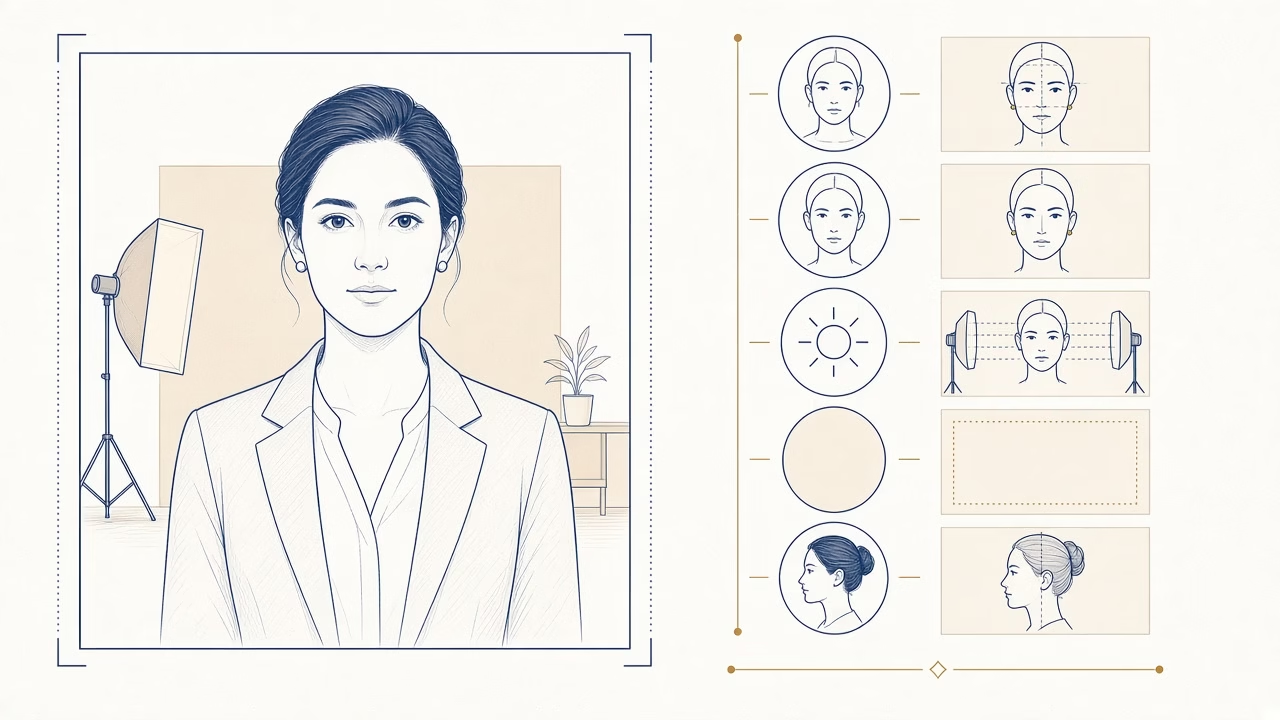
A passport photograph is neither a social-media portrait nor simply a print of a particular size. Its purpose is to show your features clearly and consistently in support of identification. The best preparation is practical: allow enough time, present a calm everyday appearance, minimise accessories and understand the current digital process.
For a Greek passport application made in Greece, the ordinary route from 1 February 2026 requires a recent colour digital photograph through myPhoto, following ICAO 9303. Temporary acceptance of printed photographs ended on 31 January 2026. Our detailed local passport photography guide for Volos covers the complete workflow. This article concentrates on a checklist designed to prevent avoidable problems before, during and after the session.
The day before
- Confirm that the capture is for the correct document and country.
- Avoid planning an immediate major hairstyle or appearance change if you will apply shortly afterwards.
- Choose a simple top in a colour that remains distinct against a light background.
- Allow sufficient time, particularly for a baby, young child or anyone needing support.
- Bring the details required for accurate digital submission.
You do not need special make-up or theatrical preparation. Excess shine can complicate lighting, while very heavy coverage may alter the perception of natural features. Favour your normal appearance. If a temporary injury or dressing materially changes your face, ask the issuing authority whether waiting is advisable.
Clothing and accessories
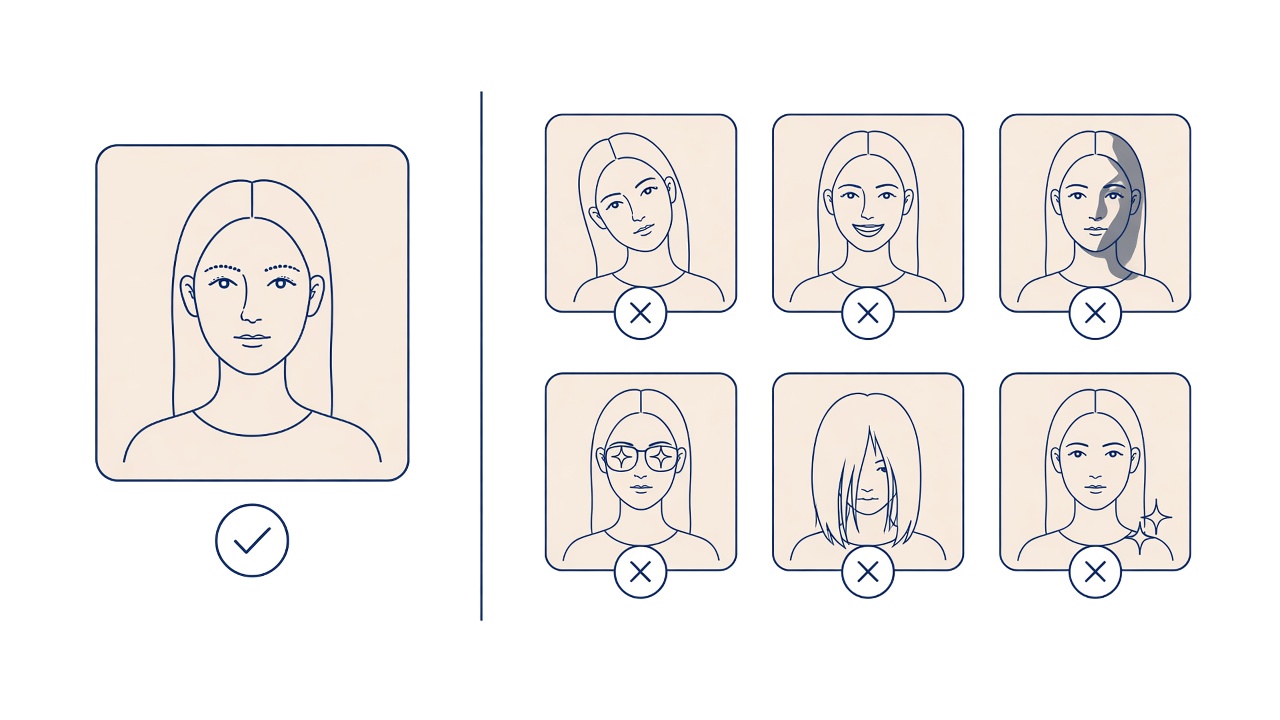
The capture is made in civilian clothing. A plain or understated top helps maintain a clear composition. Avoid uniforms, very high collars, bulky scarves and accessories that conceal the outline of the face. Jewellery that reflects strongly or touches the face is best removed temporarily. These choices are not about fashion; they preserve an unobstructed, recognisable image.
Do not choose a garment merely because it looked good in a previous document photograph. Background, crop and official rules may differ. Bring an alternative simple top if you are uncertain, especially where your first choice is very pale, highly reflective or patterned.
Hair, expression and posture
Hair can retain its normal style provided it does not cover the eyes or essential features. Do not tilt your head or turn a shoulder as you might for a portrait. Look straight into the lens, keep your mouth closed and adopt a neutral, natural expression. A broad smile changes facial geometry and is unsuitable for a biometric image.
Follow the photographer’s brief directions about chin height and body position. Small adjustments can remove a posture imbalance or shadow. Do not attempt to hold an exaggeratedly rigid face for a long time; relaxed breathing usually creates a steadier, more natural result.
Spectacles and lenses
The eyes must be clearly visible. Reflections, shadows from heavy frames, and dark or photochromic lenses can cause difficulty. Unless there is a medical reason, temporarily removing spectacles generally simplifies capture. Do not wear decorative coloured contact lenses that noticeably alter the iris. For a particular medical situation, request official guidance and inform the photographer before the session.
Head coverings
Hats, hoods and decorative coverings should be removed. A covering worn for religious reasons may receive specific treatment, but the facial features must remain visible as required by the competent authority. If in doubt, consult the official specification before the session rather than relying on a general answer from another applicant.
Babies and children
Arrange the session for a time when the child is normally calm, rested and fed. Choose simple clothing and avoid bibs, large bows or accessories near the face. An adult’s hands, toys and dummies must not appear in the final frame. Do not pressure a child to smile. The aim is for them to look towards the camera during a brief calm moment.
For a baby, allow time for repeat attempts and short breaks. The image still needs to support clear identification, but achieving it calls for patience. Where a child has a medical or developmental condition affecting capture, contact the responsible service for any applicable arrangements rather than improvising a workaround.
Retouching: technical preparation, not a new face
An official photograph must look like you. Face shape, nose, eyes, hairline, scars, moles and other identifying features must not be altered. Smoothing that removes natural texture and artificial-intelligence beauty filters can produce an unfaithful image. Proper technical processing is limited to what is needed for accurate colour, tone and compositional compliance.
Avoid editing the delivered image yourself. Phone applications can change aspect ratio, sharpen edges, remove background detail or compress the file without making this obvious. The file submitted through the official route should remain the professionally prepared version.
Recency and the digital follow-through
A Greek passport photograph must have been taken within the previous six months. If your appearance changes substantially, do not wait for that period to expire. After capture, the authorised photographer submits the image to myPhoto and provides a code. Follow the association steps, keep the code secure and make sure you do not confuse it with your application or appointment number.
A successful upload does not amount to passport approval. Check your remaining documents and the current official instructions. Final assessment belongs to the passport authority.
Final five-minute check
- Remove anything that obscures the face or creates glare.
- Check that hair is comfortable and clear of the eyes.
- Relax the shoulders, keep the head upright and follow positioning instructions.
- Confirm how you will receive and use the myPhoto code.
- Retain the code securely and complete the official next step promptly.
If you are applying for a non-Greek passport, do not apply this checklist as though every technical point were universal. Bring the current embassy or passport authority requirements, particularly where they specify another background, print format or digital submission route.
Frequently asked questions
What colour clothing should I wear?
Choose a simple garment that remains distinct against a light background and does not conceal the neck or facial outline.
Must my ears be visible?
The key point is that essential features and the facial outline satisfy the official specification, not that you force an unnatural hairstyle.
May I smile?
Use a neutral, natural expression with a closed mouth and look directly into the lens.
Should I remove my spectacles?
Removal usually prevents glare and shadows. If there is a medical reason, obtain specific official guidance.
Is a religious head covering permitted?
Specific provision may apply, but the face must remain visible in the way required by the competent authority.
How should I prepare a baby?
Choose a calm time, remove the dummy and accessories, and allow time for a capture with no adult’s hands in frame.
Can a scar be removed by retouching?
Permanent identifying features must not be removed. The image needs to remain faithful to your current appearance.
How recent must the image be?
For a Greek passport, it must be taken within the preceding six months and represent you now.
Do I need printed photographs?
Not for the ordinary application in Greece after 31 January 2026. The myPhoto digital route applies, subject to narrowly defined official exceptions.
Does careful preparation guarantee acceptance?
No. It reduces avoidable technical problems, but final acceptance belongs exclusively to the competent authority.
Arrange your passport photograph in Volos
Panorama Studio has served Volos since 1989 and is an authorised myPhoto photographer. For a careful capture and clear explanation of the code, contact us. Final assessment of the photograph remains with the competent authority.