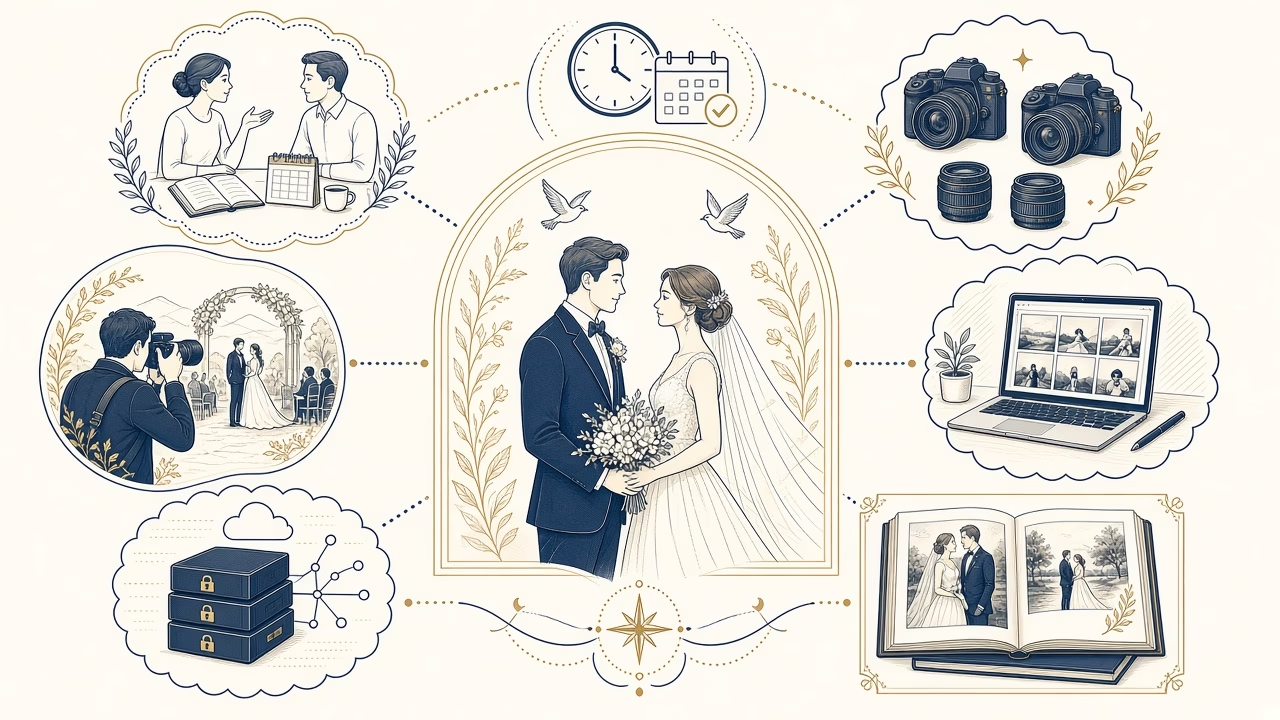
When wedding coverage appears as one figure beside eight or ten hours of attendance, a reasonable question follows: “Are we paying all that for one day?” The visible wedding is only one part of a longer production. The fee also supports preparation, communication, people, post-production, equipment, secure file handling, operating costs and responsibility for events that cannot be repeated.
That does not mean every high fee is justified, or that a less expensive photographer is inadequate. Studios have different structures, experience, overheads and scopes. The useful aim is to understand what is included, then compare equivalent proposals with respect for both the work and your budget.
The work starts before a camera appears
An organised service commonly begins with a discovery call or consultation about the people, priorities, visual approach and practical constraints. The studio then prepares a proposal and contract, sends questionnaires, gathers addresses and builds a timeline. It checks journeys between preparations, ceremony and reception, identifies difficult transitions and coordinates where necessary with the planner, venue, filmmaker, assistant or second photographer.
Scouting is not essential for every familiar venue, but it may be sensible when access, light, parking or restrictions are uncertain. Even without a visit, route research and contingency planning take place. Emails, calls and revisions to the schedule before and after the wedding are real labour, although none appears as a separate photograph.
Preparation, checks and synchronisation
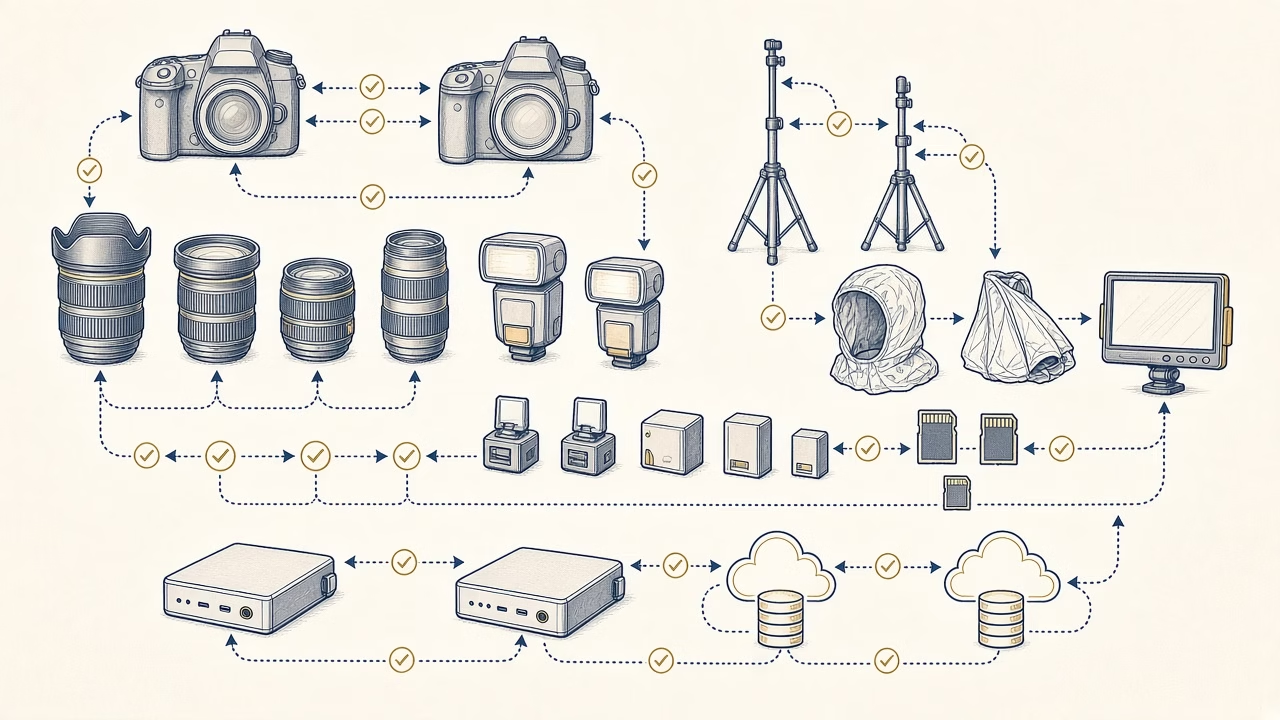
Before departure, cameras and lenses are cleaned and checked, batteries charged, cards prepared, and flashes, triggers and lights tested. Dates and clocks are synchronised across cameras so files from several people sort into the correct sequence. Packing lists are checked, safe updates completed and backup items made ready. Preparation reduces avoidable risk; it cannot claim to remove every possible failure.
The wedding day is demanding field work
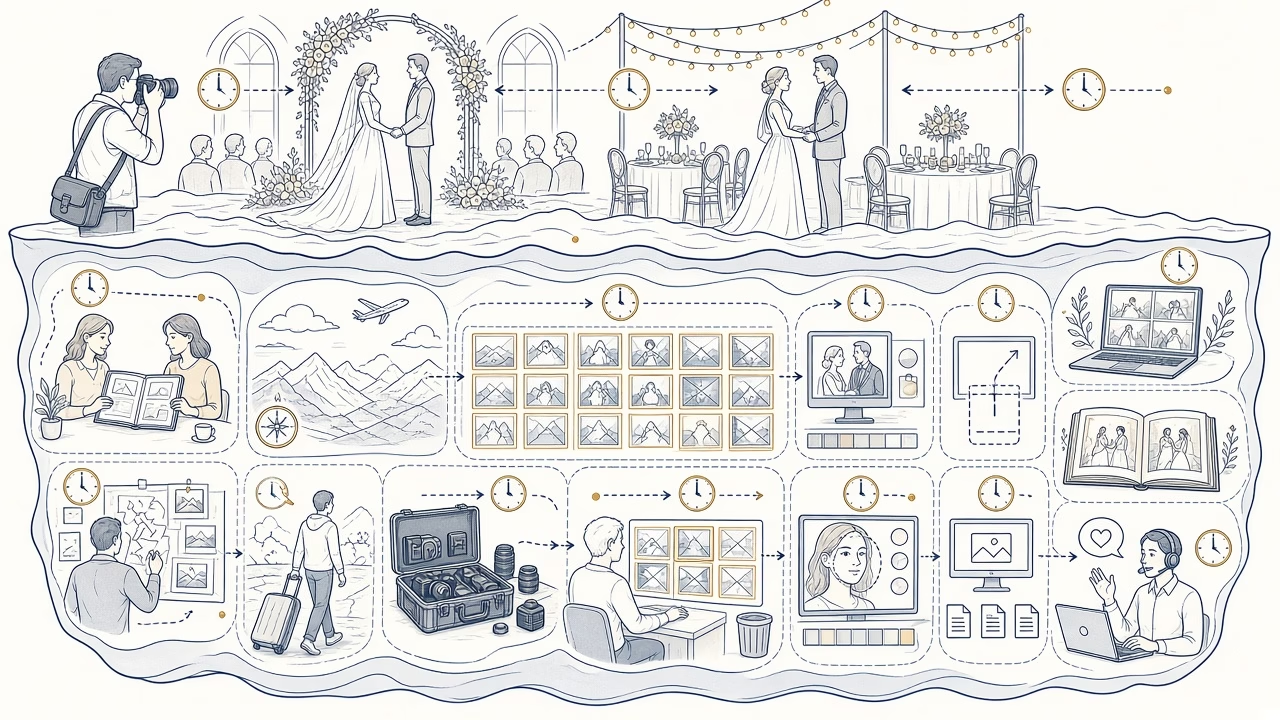
Coverage hours do not always describe the whole shift. Loading, travel, early arrival, lighting setup, transfers between venues and packing down sit around the published attendance. A photographer works on their feet, carries weight, moves carefully through crowds and maintains concentration in heat, cold, loud music and limited light.
Technical pressure combines with split-second responsibility. Entrances, rings, embraces and reactions will not pause for the camera. Exposure, focus, position, safety and human interaction require continuous decisions without interrupting the ceremony. An assistant or second shooter can cover simultaneous events and add another viewpoint, but that is additional human labour rather than a cost-free extra.
An illustrative labour range, not a universal formula
The example below explains why ten hours at a wedding does not equal ten hours of production. It is a plausible hypothetical range, not an industry rule, promise or quotation. A short, simple event may need less; a complex multi-location wedding can require substantially more.
- Planning and communication: about 5–10 hours.
- Equipment checks and preparation: 3–5 hours.
- Travel, setup and wedding-day coverage: 11–15 hours for the lead.
- Ingest, backup and culling: 10–16 hours.
- Editing, quality control and gallery: 20–38 hours.
- Delivery and follow-up: 2–5 hours.
- Album design, when included: a further 6–14 hours.
In that example, one photographer’s workflow could total roughly 51–89 hours without an album, or 57–103 with one. If a second photographer works another 8–12 hours, those are added as person-hours: twelve hours covered by two people represents 24 field person-hours, not twelve. The figures distinguish event duration from total labour; they do not define what every studio should take.
Professional equipment and redundancy, without price-tag boasting
Wedding coverage commonly relies on two camera bodies, suitable lenses, flashes, radio triggers, cards, batteries, chargers and portable lighting. The point is not to impress couples with retail prices. It is to have the right tool and a usable alternative if a body, card or light fails.
Cleaning, servicing, repairs, monitor calibration, relevant insurance, depreciation and planned replacement also cost money. Equipment wears through use and travel even when it does not fail dramatically. A sensible quotation contributes to maintaining the whole working system, rather than charging only for whatever was purchased that month.
After the wedding, a second production begins
Files are ingested and two or three copies are created on separate media before cards are cleared, according to the studio’s workflow. Thousands of frames are then culled: technical misses and near-duplicates are removed while a coherent account of the day is retained. Culling is an editorial judgement, not merely an automatic filter.
Post-production then addresses exposure, white balance, colour consistency, contrast and crop. Selective retouching may remove temporary distractions or refine chosen portraits, but it does not necessarily mean reconstructing every frame. Export, sharpness and colour checks, corrections, gallery organisation and a final quality-control pass follow. The exact depth of editing should be stated rather than assumed.
Data protection, backup and archive policy
Responsible handling involves restricted access, maintained systems and redundant local and, where used, cloud copies. Cloud alone is not magic protection, while one drive in the same room is not a complete plan. Account security, encryption where appropriate, retention periods and safe deletion all matter.
Ask how long the finished gallery remains online and how long the studio intends to retain delivered files. An archive policy is not a promise of permanent storage, and couples should make their own copies after delivery. The fee supports risk reduction and recovery planning; it cannot honestly guarantee that technology will never fail.
The operating costs behind an assignment
Many tools carry active monthly or annual fees: editing software, gallery and delivery platforms, cloud storage, backup, website hosting, domain, professional email, CRM, contract tools, cybersecurity, accounting and invoicing. Studios do not all use the same stack, and no single list should be presented as mandatory. Their actual systems and costs legitimately differ.
There may also be taxes and VAT where applicable, social contributions, an accountant, business or equipment insurance, legal and compliance support, and payment-processing fees. Office or studio space, electricity, internet, vehicle costs, fuel, tolls, accommodation, packaging and couriers add further overhead. These items may not appear as individual lines, but a sustainable business must fund them from its revenue.

Education, non-billable work and seasonality
Consistency develops through education, testing, technical practice, portfolio development and honest review of previous work. Administration, website updates, marketing, enquiries that do not become bookings, supplies, maintenance and customer support also occupy time that cannot be billed to one couple. Experience is valuable when it produces dependable decisions, calm problem-solving and a credible contingency plan, not merely a large number of years.
Wedding work is seasonal, and the number of Saturdays in a year is finite. Accepting one full wedding prevents accepting another at the same time, while income from busy months helps support year-round operations. That is genuine opportunity cost, but it should never become artificial pressure or an unsupported claim that “only one date remains”.
An album is a distinct product
When an album is included, coverage does not automatically pay for all of its production. Image selection, page design, proof preparation, revision rounds and print-ready files take labour. The professional lab charges for printing, binding, materials, covers, parent copies and shipping. Dimensions, page count, materials, included revisions and production estimate should therefore be specified.
How to compare wedding quotations fairly
- The same hours, with exact start and finish points.
- The number of photographers or assistants and each person’s role.
- Deliverables, approximate volume, editing scope and delivery method.
- Travel, tolls, accommodation, overtime and applicable taxes.
- Album dimensions, pages, materials, proof revisions and lab production.
- Expected delivery timing, backup workflow and archive policy.
- Payment, date-change, cancellation and emergency substitution terms.
- Rights for personal use, supplier publication and privacy.
A lower fee may be entirely appropriate because it covers fewer hours, a smaller team, a newer business or digital-only delivery. A higher fee may include more labour, products, redundancy or experience. Neither is automatically poor or better. Look for a match between scope, trust, visual approach, terms and your available budget. You can review configurable wedding and baptism options through the online quotation tool without treating one package as universal.
Questions worth resolving before booking
Ask what happens if the schedule overruns, when editing is considered complete and whether travel or tax can change. Confirm who will actually attend, what “full coverage” means, whether unedited files are excluded and when album work begins. Clear answers protect both sides because expectations become part of the decision before the date is reserved.
Frequently asked questions
Why not divide the fee by the wedding-day hours?
Because the fee covers planning, preparation, travel, culling, editing, delivery, infrastructure and business overhead. Attendance is only one part of the assignment.
How many total hours does one wedding require?
There is no universal number. The article’s illustrative range shows one possible workflow, while schedule, team size, image volume and deliverables can change it substantially.
Why are two camera bodies useful?
They allow efficient lens changes and provide immediate redundancy if one body has a fault. They reduce a major risk but cannot eliminate every possible problem.
Does a second photographer double the hours?
Published coverage time remains the same, but person-hours and files increase. Twelve hours worked by two people equals 24 field person-hours.
Does editing include detailed retouching of every image?
Usually all delivered files receive consistent core editing, with selective detailed retouching where appropriate. The exact scope should be defined in the proposal.
Are wedding files safe in the cloud?
Cloud storage can support a redundant strategy, but it is not a sole guarantee. Local copies, secure accounts and a clear retention policy remain important.
Why can an album cost extra?
It requires design, proofs, revisions, printing, binding, materials and shipping. It is a physical production with its own labour and supplier costs.
Does a lower quotation mean lower quality?
No. It may reflect a different scope or business model. Review full galleries, terms, deliverables and consistency instead of judging from the figure alone.
Should VAT and travel appear in the quotation?
The proposal should make clear whether applicable tax, journeys, tolls and accommodation are included, so the final amount is not ambiguous.
What is the most useful question before deciding?
Ask exactly what the total includes and excludes. Then decide whether the approach, terms and risk-management plan give you appropriate confidence.
Follow us



Design your album online with our application
Upload your favourite photographs, arrange the pages and prepare your own Photobook.
Request a clear, comparable proposal
Configure wedding or baptism options in the online quotation tool, or contact FotoPanorama in English to clarify hours, team, deliverables and album specifications before deciding.