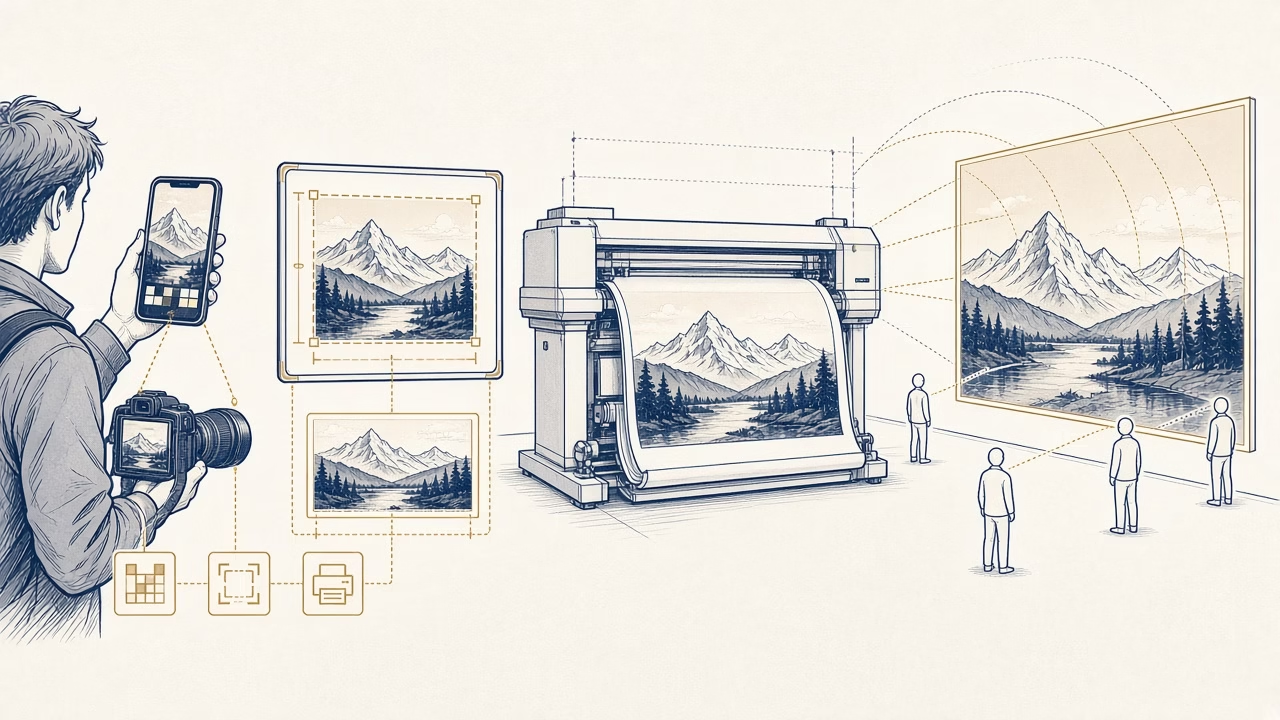
The question “How many megapixels do I need?” has no useful answer without print size, aspect ratio and viewing distance. A framed photograph inspected closely has different demands from a wall canvas or poster seen across a room. A practical assessment begins with genuine pixel dimensions after cropping and ends, for valuable work, with a sample on the intended material.
Pixels and PPI, not the file’s DPI tag
Pixels are the actual samples in a digital image. PPI describes how many of them are placed into one inch of the print. The calculation is straightforward: pixels along one edge divided by inches along that printed edge equals PPI. DPI more strictly describes output-device dots and should not be treated as another name for the source pixels.
A 72, 96 or 300 dpi metadata value does not independently change detail. A 6000×4000-pixel image remains a 24-megapixel image whether that label says 72 or 300. The label may alter the proposed physical size in software that reads it. For quality planning, inspect 6000×4000 and the final crop first, then decide how those pixels will be distributed.
Worked resolution examples
A 30×45 cm print is approximately 11.81×17.72 inches. At 300 PPI it needs about 3543×5315 pixels; at 200 PPI, roughly 2362×3543. For a width of 60 cm, approximately 23.62 inches, 300 PPI corresponds to about 7087 pixels across and 200 PPI to about 4724. These figures are planning references, not universal pass-or-fail boundaries.
If a photograph is 4032 pixels wide and printed at 60 cm with no crop, it supplies about 171 PPI. That can work for a clean, sharply focused image at a normal wall-viewing distance, but it will not show the same close-range detail as a true 300 PPI source. Motion blur, noise, focus and processing matter alongside the arithmetic.
Viewing distance, crop and aspect ratio
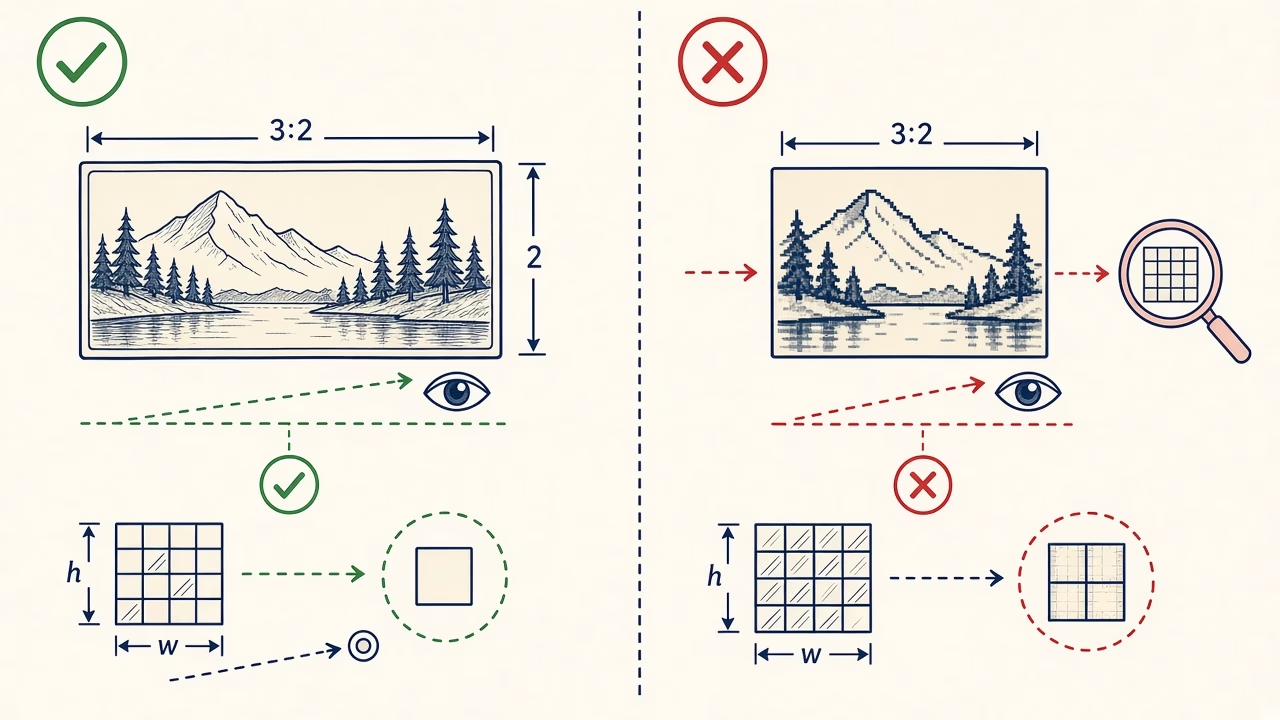
As viewing distance increases, the eye resolves less individual detail, so a lower pixel density can be appropriate. This does not make every tiny file suitable for a billboard; the source still needs coherent structure and the intended use must be realistic. Tell the lab whether the piece will hang above a sofa, be read as exhibition work or be examined closely in the hand.
Cropping removes pixels. In addition, the 4:3 ratio used by many phones does not fit a 2:3, square or panoramic format exactly. Decide whether part of the picture can be removed, a border should be added or the finished dimensions should change. Never stretch the image to force another ratio because faces and objects will be distorted.
Interpolation and phone files
Interpolation creates new pixels from existing ones. Current tools can smooth edges and reduce obvious pixelation, but they cannot recover authentic detail that the camera never recorded. Aggressive enlargement may invent texture, emphasise noise or create a plastic appearance. Apply it after the final crop and judge a print-size preview, preferably alongside a physical sample.
Phones often provide enough pixels for substantial family prints when the original is used, focus is accurate and messaging compression has not intervened. Night mode, digital zoom and portrait segmentation can introduce local defects despite a large nominal resolution. Fully download the image from cloud storage, avoid screenshots and inspect faces and fine structures before sending it.
Material and a full-scale test crop
Glossy photographic media can emphasise detail and reflections, while matte papers and canvas diffuse the surface and produce a different impression of sharpness. Texture may make minor imperfections less conspicuous, but it cannot repair serious camera movement or incorrect focus. Request a test crop printed at final scale from a face, text and a detailed area. View it at the expected distance, not solely under magnification.
Large-format printing at Foto Panorama
Foto Panorama operates a plotter for prints up to 60 cm wide. Final length is project-dependent: the file, aspect ratio, material, roll and presentation method must be confirmed before production. The official page for canvas and large-format printing describes the service. Standard Online Print sizes follow a separate current catalogue. Software, available media and service options can change, so discuss the actual project rather than inferring availability from an old list.
Prepare a useful request
Send the original file, desired physical dimensions, intended viewing distance and a description of where it will hang. Mention whether cropping is allowed and whether a frame will cover the edges. The lab can then calculate post-crop PPI, flag weak regions and recommend an appropriate proof. Supplying only a screenshot and asking for the largest possible output removes the information needed for a responsible recommendation.
Frequently asked questions
How many pixels do I need across 60 cm?
About 7087 pixels provide 300 PPI and 4724 provide 200 PPI across that width, before any crop is taken from the source.
Is 300 PPI compulsory?
Not in every case. Suitable density depends on viewing distance, subject, source sharpness, material and expectations for close inspection.
What does 72 DPI in my file mean?
It is often only a proposed-size metadata tag. Actual width and height in pixels show how much sampled image information exists.
How do I calculate PPI?
Divide the pixels on one post-crop edge by that edge’s final print length in inches, using the dimensions actually being produced.
Can a phone photograph be printed large?
Often yes, when it is the focused original and provides enough information for the expected distance; each individual source still needs inspection.
Does AI enlargement add real detail?
It generates pixels and can improve apparent smoothness, but cannot recover authentic scene information that the camera failed to capture.
What if the aspect ratio does not fit?
Choose a crop, border or different print size. Stretching to fill changes subject proportions and is not an acceptable substitute.
Which material hides imperfections?
Canvas and textured surfaces can appear forgiving, but select them for the desired look rather than to conceal severe blur or focus errors.
What is a test crop?
It is a small section printed at final scale so faces, edges, noise, texture and sharpening can be assessed before the full piece.
How long can the plotter print?
Width reaches 60 cm; feasible length is confirmed per project according to source, material, roll availability and presentation requirements.
Interpolation software, print drivers and service catalogues evolve; request a current assessment for the specific file, dimensions and material.
Follow us



Large prints up to 60 cm wide
Plan your large print
Send Foto Panorama the original file and intended size for review of crop, effective resolution, material and a full-scale proof.