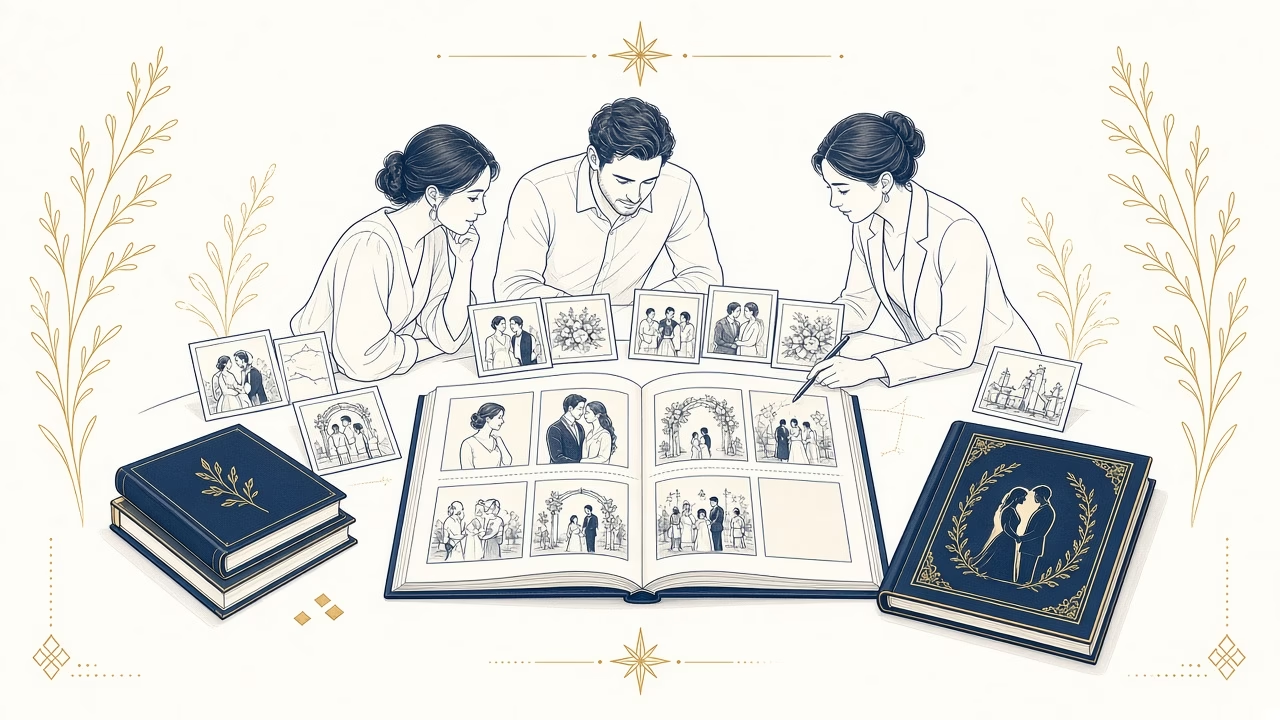
Choosing wedding album photos is not a contest to find the most spectacular frames. It is a small editing process in which you decide which beginning, people, gestures, transitions, and ending should live together in an object made to be revisited. A photograph may be excellent on its own yet add little when three near-identical frames already perform the same job. Conversely, a quiet room view or a brief glance can connect two major moments and make the story easier to follow.
Begin with the story, not a target number
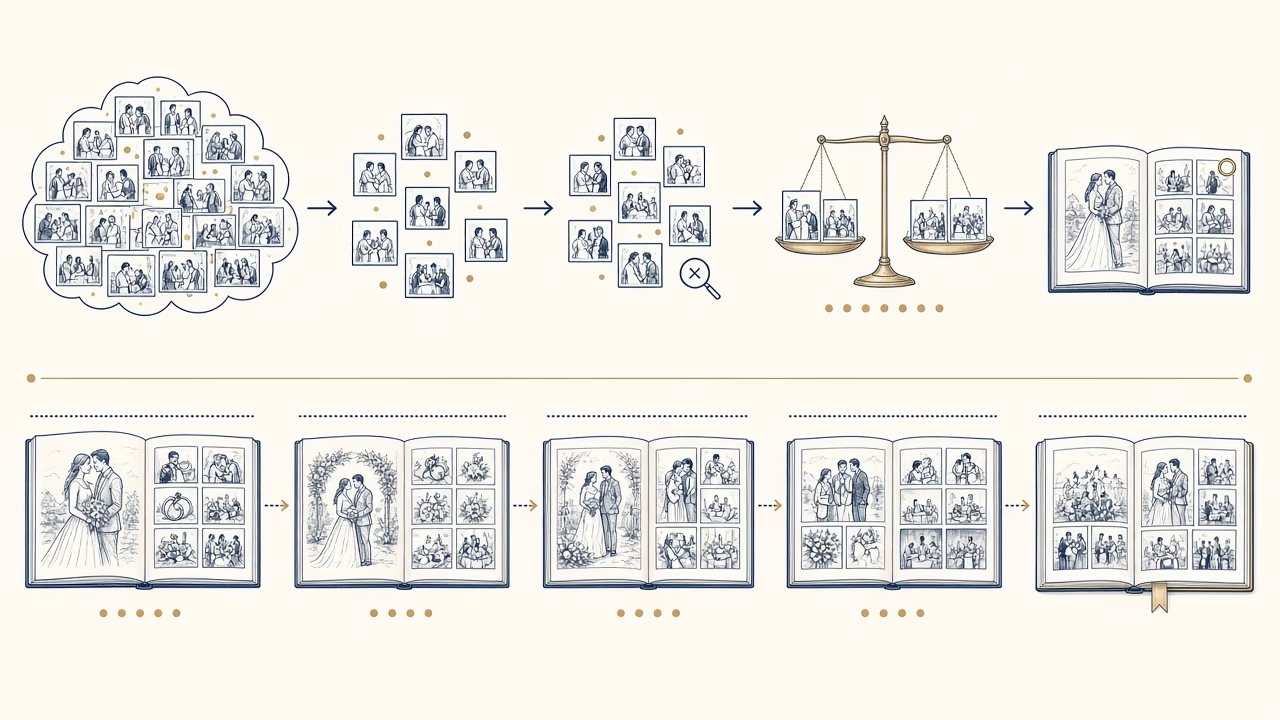
Before marking favourites, view the complete gallery in order. Identify the chapters that were actually covered: preparations, arrivals, ceremony, congratulations, portraits, reception, and departure. They do not need equal space, but a reader should understand how the day unfolded. Mark the non-negotiable images first and keep attractive alternatives in a separate list. This makes later reductions less emotional. It also prevents an early burst of enthusiasm from filling most of the album with preparations while leaving little room for the ceremony or the people who joined you.
Remove repetition without removing feeling
Burst sequences of an embrace, kiss, or ring exchange often contain very small differences. Compare expression, hand position, background distractions, focus, and the way each frame connects to the next event. Keep one lead image and retain a second only when the sequence adds meaning. Removing near-duplicates creates room for different people and details. It does not normally remove those photographs from the delivered digital gallery; it simply means they do not occupy limited printed space. Confirm your own package terms if album selection affects any other deliverable.
Create variety in people and visual scale
A balanced album moves between wide establishing views, medium scenes, close portraits, and small details. Pair an overview of the venue with clothing, flowers, rings, table elements, or an unplanned reaction. Review representation across both families and close friends as well. Balance is not a mathematical quota: it depends on real relationships, attendance, and what the coverage contains. A short name checklist can reveal that someone important is missing, without turning the book into a register of required appearances. Give special attention to people whose presence has lasting personal significance.
Think in spreads rather than isolated pages
Albums are generally designed as a sequence of two-page spreads. Each spread benefits from a clear priority: one leading photograph or a small group that reads as a unit. A wide portrait can become the hero image, while three detail frames establish rhythm opposite it. When every photograph has the same size, important moments lose emphasis. When every spread is crowded, the eye has nowhere to rest. Capacity depends on the album dimensions, page count, binding, and design style, so obtain a suggested selection range instead of relying on a number from another couple’s book.
Match technical quality to intended size
An image that looks sharp on a phone may not hold up as a full spread because of resolution, motion, noise, or a heavy crop. The photographer or designer can flag the issue and suggest a smaller position or another frame. A technical weakness does not automatically disqualify a unique emotional moment; it does mean the print compromise should be understood before approval. Supply the original delivered high-resolution JPEG rather than a screenshot, social-media download, or messaging-app copy. Recompressed files can introduce limitations that were absent from the delivered photograph.
Use a manageable couple workflow
If it reduces pressure, complete one pass separately and a second pass together. Merge the choices, remove obvious duplicates, and group the remainder by chapter. Then review the important people, visual variety, and total quantity. Refer to exact file names or use the online gallery’s favourites function instead of descriptions such as “the one beside the tree.” Keep a copy of the submitted list and agree which partner will consolidate comments. A single, organised response is easier to apply than overlapping emails with conflicting replacements and helps protect the agreed revision allowance.
Review the design proof carefully
Selection is not finished until you inspect the album proof. Check chronology, crops, faces near the centre fold, names, dates, and whether a key image has become too small. Return precise notes by spread and confirm how many revision rounds your agreement includes. A screen proof communicates composition but cannot represent every property of printed colour, paper, or cover material. Once final approval is given, later changes may cost extra or become impossible after production begins. Take an unhurried final pass and ask about anything that is not clear rather than assuming it will change in print.
Frequently asked questions
How many photographs fit in a wedding album?
There is no single correct number. Album size, spread count, image scale, binding, and design style all matter. Ask for a recommended range before finalising your shortlist.
Should the album contain only portraits of us?
No. Venue views, guests, details, and candid reactions provide context. They turn a portrait collection into a fuller account of the celebration and the people present.
How do we choose between two similar frames?
Compare expression, eye line, hands, background, sharpness, and narrative fit. Select the frame that communicates the moment clearly and works best beside the surrounding photographs.
Do both families need exactly equal photo counts?
Not necessarily. Check that personally important people are represented in a way that reflects your relationships, attendance, and actual coverage rather than enforcing an artificial numerical split.
What does “hero image” mean?
It is the photograph given the strongest visual priority on a spread, often at a larger size. Not every spread needs a dramatic full-page hero treatment.
Can we include a photograph with a technical flaw?
Yes, when the moment is irreplaceable and you understand the limitation. A smaller placement may make slight motion, noise, or limited resolution less noticeable in print.
Who makes the final photo selection?
The couple sets personal priorities, while the photographer or designer can advise on print quality, pacing, and layout. The precise responsibility should be clear in your agreement.
How many proof revisions are included?
The offer or contract should specify this. Confirm what counts as a revision round, how consolidated feedback is submitted, and whether additional changes have a separate fee.
Can photographs change after design approval?
Ask immediately. A change may be possible before production, sometimes at extra cost. Once printing has started, the approved copy generally cannot be altered during that run.
What is the clearest way to submit our choices?
Use exact filenames or the gallery’s favourites tool, send one consolidated list, and retain a copy. This makes it easier to compare the selection with the design proof.
Follow us



Design your album online
Turn your selection into a Photobook
Explore Photobook options and discuss dimensions, materials, spread count, and the proof process before choosing a format.