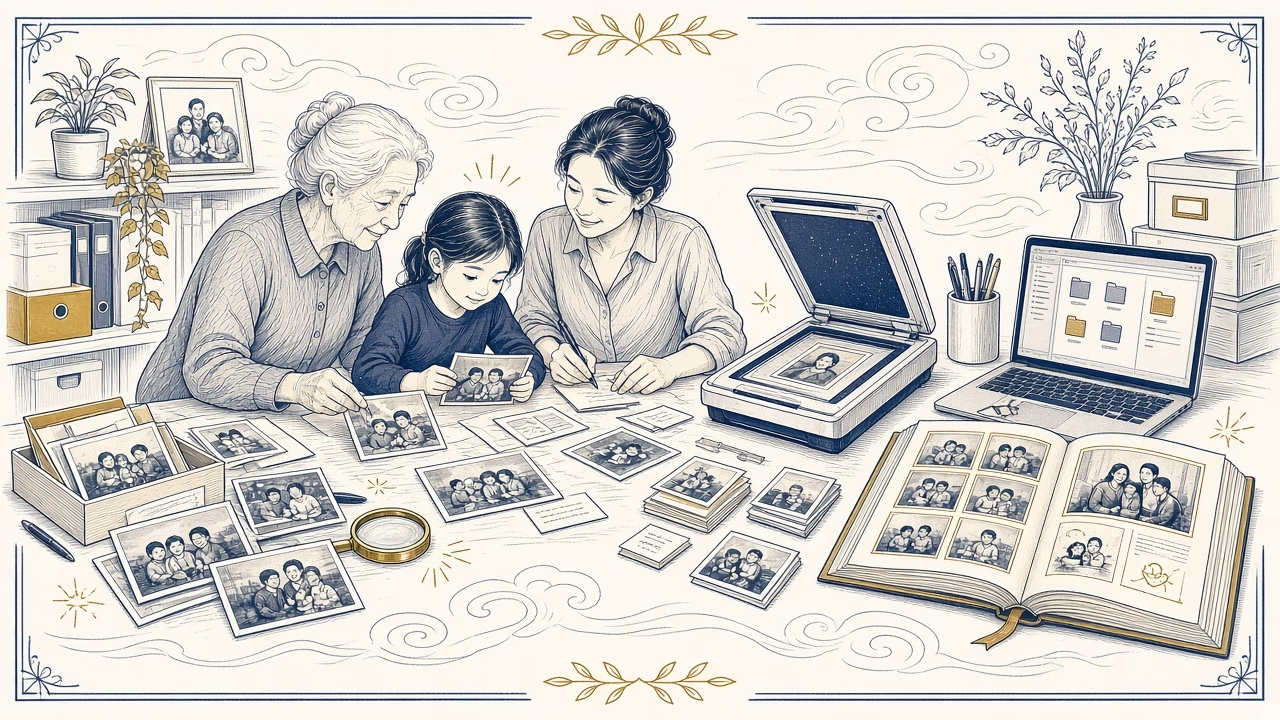
A family archive should answer not only “who is in this photograph?” but also “when, where and why does it matter?” Scanning preserves visual information, but not automatically the names, relationships and stories known by an older relative. Work in small batches, use consistent naming, mark uncertainty honestly, keep several copies and agree who may gain access and who will continue caring for the collection.
Ten practical steps
Purpose and a small beginning
Decide whether you cover one branch, every generation or a period, and test the method on one album first. In practice, “Purpose and a small beginning” should become a habit in a multi-generation archive, not a last-minute repair. Notice what changes before and after the choice, then retain the version that serves the photograph clearly within “Purpose and a small beginning”.
Provenance without mixing
Keep each box, envelope or album as a separate unit and record who supplied it because original order carries information. The aim of “Provenance without mixing” is not perfection but a dependable decision in a multi-generation archive. If two options seem equal, favour the one retaining more information and leaving scope for future use within “Provenance without mixing”.
Safe handling
Work with clean dry hands on a clear surface, never force stuck photographs apart and consult a specialist for fragile material. Give “Safe handling” particular attention in a multi-generation archive, because small details are easily missed on a compact screen. A deliberate look at faces, edges and information prevents avoidable correction later within “Safe handling”.
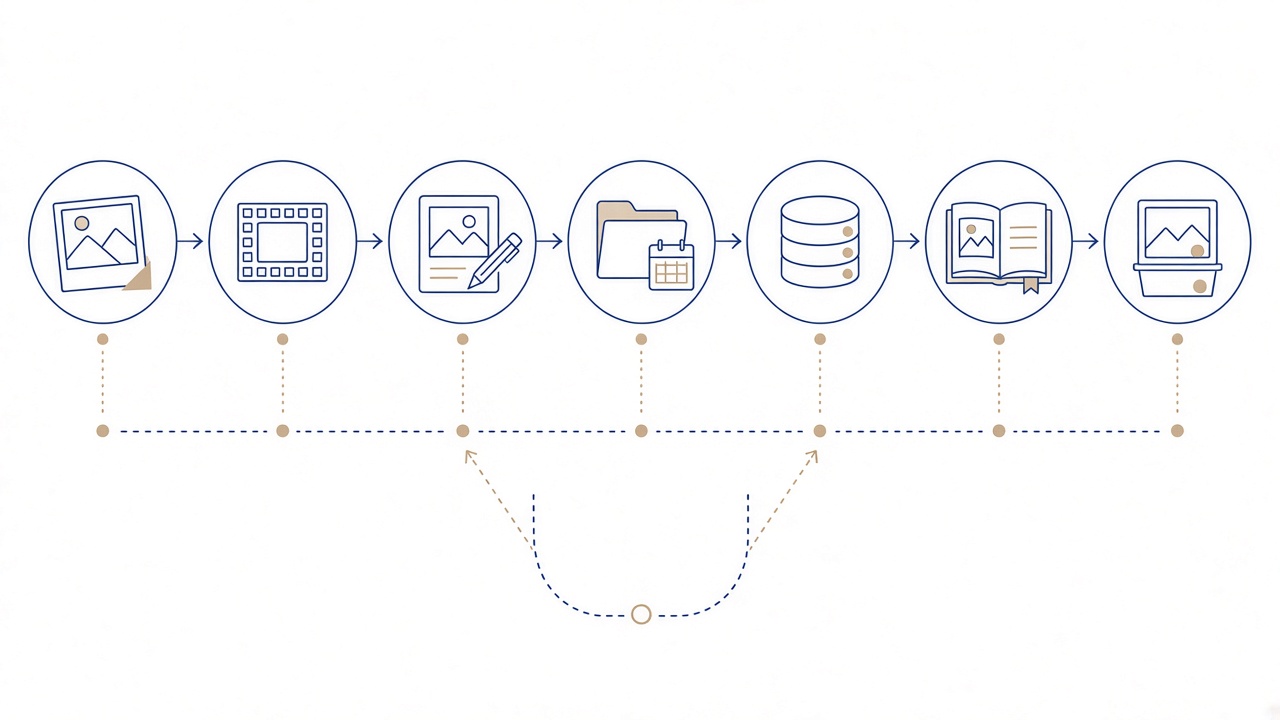
Consistent scanning
Scan the complete image and any annotated reverse, retaining a high-quality master and smaller access copies. For “Consistent scanning” to work in a multi-generation archive, avoid bulk automatic choices when the material has personal value. Test one representative case and judge the actual result rather than trusting an application status alone within “Consistent scanning”.
Names, dates and uncertainty
Record full names, relationships, place, likely date and source, using circa or a range instead of presenting a guess as fact. Consistency in “Names, dates and uncertainty” is more useful than a complicated technique in a multi-generation archive. Choose a rule you can remember, but allow exceptions when the story or safety of a particular picture demands one within “Names, dates and uncertainty”.
Context and oral histories
Add short captions about work, celebration, migration or relationships, and record relatives’ testimony with permission and a clear source. If “Context and oral histories” feels difficult in a multi-generation archive, divide the decision into observation, one small action and review. That order reduces haste and makes it easier to identify which change genuinely improved the outcome within “Context and oral histories”.
Consistent filenames
Use a readable date, surname, place and sequence pattern without making identity depend only on proprietary software. Do not judge “Consistent filenames” only by the most striking example in a multi-generation archive. Ask whether the same approach works for ordinary pictures and whether another person could understand it without extra explanation within “Consistent filenames”.
Multiple copies
Apply 3-2-1, separate master files from edited versions and regularly test a small restore from each medium. “Multiple copies” still requires human judgement in a multi-generation archive, even when a device offers an automatic answer. Technology can accelerate a task, but it cannot know which person, event or detail carries family meaning within “Multiple copies”.
Access, privacy and succession
Decide who sees sensitive material, who holds recovery details and who continues care if the present custodian cannot. Before considering “Access, privacy and succession” complete in a multi-generation archive, view the result from the perspective of someone encountering it later. Will they understand the moment, receive enough information and feel the people were treated respectfully specifically for “Access, privacy and succession”?
Physical selection and maintenance
Create prints or a photobook with checked captions without discarding digital originals, and schedule an annual review and new additions. Finish “Physical selection and maintenance” with a deliberate final choice in a multi-generation archive. Do not retain or share every variation by habit; a smaller considered set is easier to protect, retrieve and enjoy within “Physical selection and maintenance”.
For a documented physical selection, Online Photobook runs in a browser on phone, tablet or computer with no download. Upload pictures, choose a cover, arrange pages and order online.
Before adding a batch to the archive
- Every item retains a link to its original provenance.
- Names, dates and uncertainty are recorded clearly.
- Master scans are distinct from access copies.
- Access and permissions reflect the sensitivity of the material.
- A written succession plan and next review date exist.
Frequently asked questions
Which resolution is suitable for scanning an old photograph?
The practical answer is this: decide whether you cover one branch, every generation or a period, and test the method on one album first.
Should I scan the reverse side as well?
In this situation, keep each box, envelope or album as a separate unit and record who supplied it because original order carries information.
How should I name a file when some people are unknown?
As a safe starting point, work with clean dry hands on a clear surface, never force stuck photographs apart and consult a specialist for fragile material.
How do I record a date that is only probable?
To avoid a common mistake, scan the complete image and any annotated reverse, retaining a high-quality master and smaller access copies.
Where should stories accompanying a picture be stored?
In everyday use, record full names, relationships, place, likely date and source, using circa or a range instead of presenting a guess as fact.
Do I need permission to record a relative’s oral testimony?
When the material has particular value, add short captions about work, celebration, migration or relationships, and record relatives’ testimony with permission and a clear source.
How should sensitive family photographs be handled?
Before changing a setting, use a readable date, surname, place and sequence pattern without making identity depend only on proprietary software.
How many copies does a master scan need?
When comparing two options, apply 3-2-1, separate master files from edited versions and regularly test a small restore from each medium.
Who takes responsibility for the archive in the next generation?
For a consistent result, decide who sees sensitive material, who holds recovery details and who continues care if the present custodian cannot.
How often should the archive be checked and refreshed?
The essential test is that: create prints or a photobook with checked captions without discarding digital originals, and schedule an annual review and new additions.
Prepared a documented family collection for prints or a photobook? Talk to Panorama Studio in Volos, working with photography since 1989 and ready to discuss “How to Build a Family Photo Archive”.