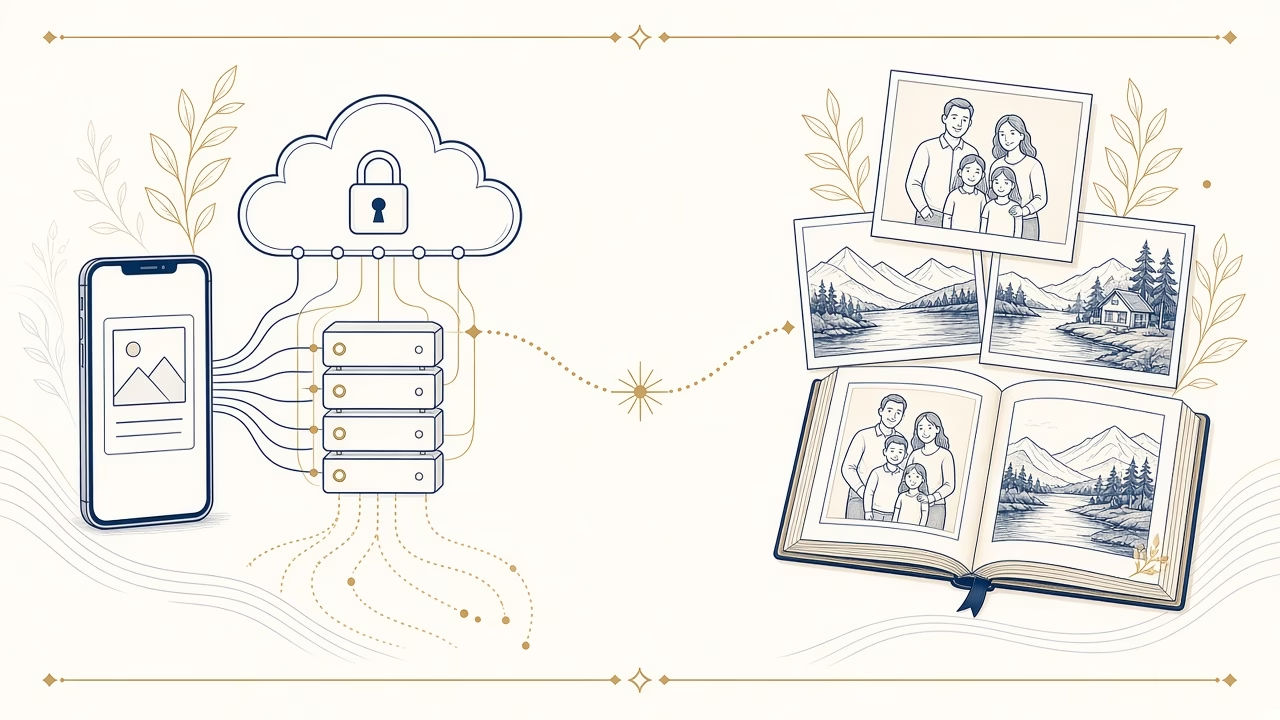
Cloud storage and print solve different problems. Online storage makes access and synchronisation convenient, but depends on an account, service policies and workable recovery. A print opens without a password or device, yet it does not contain every original or create another copy by itself. A resilient family strategy combines cloud storage, a verified local copy and a considered selection of physical photographs or books.
Ten practical steps
A combination, not a contest
Digital originals support copying and reuse, whilst print offers independent access without an account, device or battery. In practice, “A combination, not a contest” should become a habit within the wider preservation plan, not a last-minute repair. Notice what changes before and after the choice, then retain the version that serves the photograph clearly within “A combination, not a contest”.
The 3-2-1 rule
Keep three copies on two types of media, with one in another location, and test that each copy opens. The aim of “The 3-2-1 rule” is not perfection but a dependable decision within the wider preservation plan. If two options seem equal, favour the one retaining more information and leaving scope for future use within “The 3-2-1 rule”.
Sync is not always backup
A deletion, corruption or mistake may synchronise everywhere, so separate history or a disconnected copy is needed. Give “Sync is not always backup” particular attention within the wider preservation plan, because small details are easily missed on a compact screen. A deliberate look at faces, edges and information prevents avoidable correction later within “Sync is not always backup”.
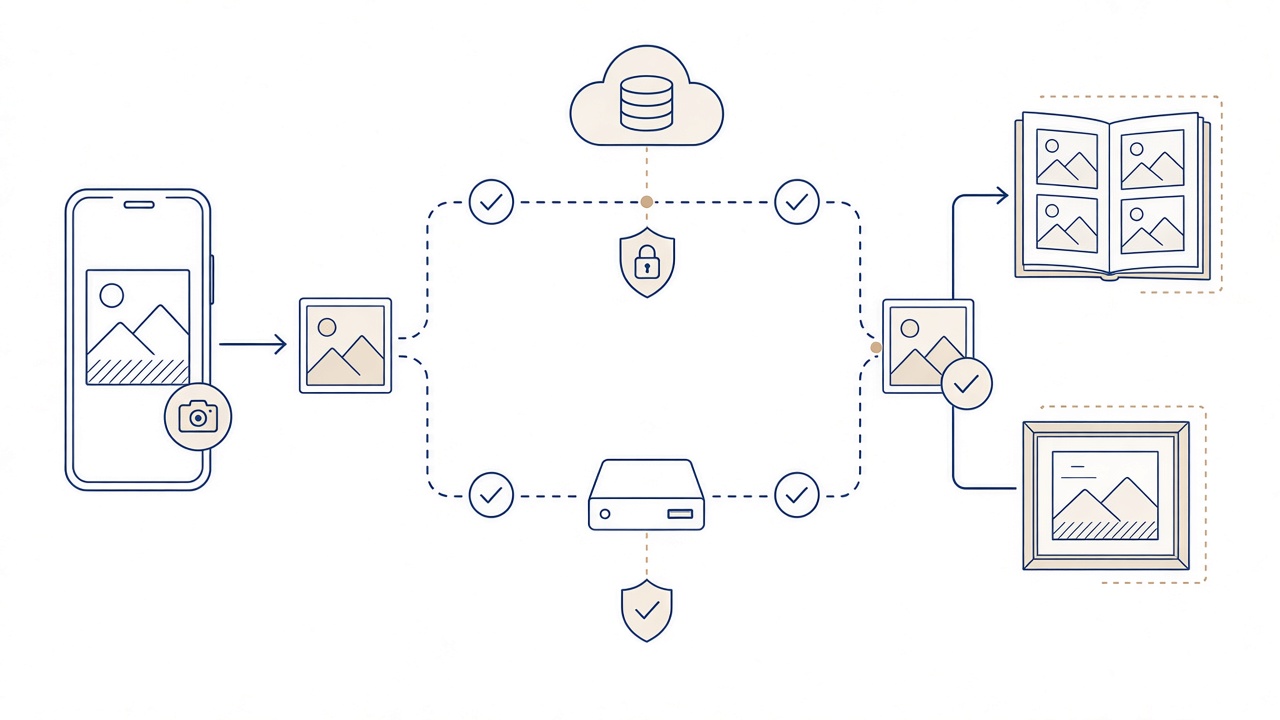
A verified local copy
Export originals to an organised computer or external medium, add a date and test a small restore instead of trusting a success indicator. For “A verified local copy” to work within the wider preservation plan, avoid bulk automatic choices when the material has personal value. Test one representative case and judge the actual result rather than trusting an application status alone within “A verified local copy”.
Account recovery
Keep recovery email and telephone current, use a unique password and second factor, and store emergency codes accessibly. Consistency in “Account recovery” is more useful than a complicated technique within the wider preservation plan. Choose a rule you can remember, but allow exceptions when the story or safety of a particular picture demands one within “Account recovery”.
Privacy and control
Check who sees shared folders, how files can be exported and what faces, locations and metadata reveal. If “Privacy and control” feels difficult within the wider preservation plan, divide the decision into observation, one small action and review. That order reduces haste and makes it easier to identify which change genuinely improved the outcome within “Privacy and control”.
Prints stored properly
Keep selected prints in a clean, dry environment away from direct sun and damp so they remain immediately accessible. Do not judge “Prints stored properly” only by the most striking example within the wider preservation plan. Ask whether the same approach works for ordinary pictures and whether another person could understand it without extra explanation within “Prints stored properly”.
An album does not replace originals
A printed album is a curated physical edition, not a complete digital archive containing every frame and its metadata. “An album does not replace originals” still requires human judgement within the wider preservation plan, even when a device offers an automatic answer. Technology can accelerate a task, but it cannot know which person, event or detail carries family meaning within “An album does not replace originals”.
Format according to use
Individual photographs suit frames and sharing, whilst a photobook organises an event or year through sequence, pages and captions. Before considering “Format according to use” complete within the wider preservation plan, view the result from the perspective of someone encountering it later. Will they understand the moment, receive enough information and feel the people were treated respectfully specifically for “Format according to use”?
Regular checks and a family plan
Record where copies and albums are, who has access and when they were checked so the system does not depend on one person. Finish “Regular checks and a family plan” with a deliberate final choice within the wider preservation plan. Do not retain or share every variation by habit; a smaller considered set is easier to protect, retrieve and enjoy within “Regular checks and a family plan”.
For physical photographs, Online Print runs in a browser without installation, accepts phone or computer uploads and provides professional Fujifilm printing in relevant sizes currently from 10×15 to 30×40. Online Photobook works on phone, tablet or computer with no download: upload pictures, choose a cover, arrange pages and order online.
A collection resilience check
- Cloud storage has a tested account-recovery route.
- A local copy exists independently of synchronisation.
- One copy is held in a different location.
- Sharing and privacy settings have been reviewed.
- Prints complement rather than replace digital originals.
Frequently asked questions
Why is synchronisation not always a backup?
The practical answer is this: digital originals support copying and reuse, whilst print offers independent access without an account, device or battery.
How does the 3-2-1 rule work in practice?
In this situation, keep three copies on two types of media, with one in another location, and test that each copy opens.
What happens if I lose the second-factor phone?
As a safe starting point, a deletion, corruption or mistake may synchronise everywhere, so separate history or a disconnected copy is needed.
Should an external drive remain connected?
To avoid a common mistake, export originals to an organised computer or external medium, add a date and test a small restore instead of trusting a success indicator.
How do I test whether a local copy works?
In everyday use, keep recovery email and telephone current, use a unique password and second factor, and store emergency codes accessibly.
Which cloud settings matter most for privacy?
When the material has particular value, check who sees shared folders, how files can be exported and what faces, locations and metadata reveal.
Can a print count as a backup?
Before changing a setting, keep selected prints in a clean, dry environment away from direct sun and damp so they remain immediately accessible.
When is a photobook more useful than individual prints?
When comparing two options, a printed album is a curated physical edition, not a complete digital archive containing every frame and its metadata.
How should physical photographs be protected at home?
For a consistent result, individual photographs suit frames and sharing, whilst a photobook organises an event or year through sequence, pages and captions.
Who should know the family recovery plan?
The essential test is that: record where copies and albums are, who has access and when they were checked so the system does not depend on one person.
Would you like help choosing between individual prints and an organised photobook? Talk to Panorama Studio in Volos, working with photography since 1989 and ready to discuss “Cloud or Print? Where Should We Keep Our Photos?”.