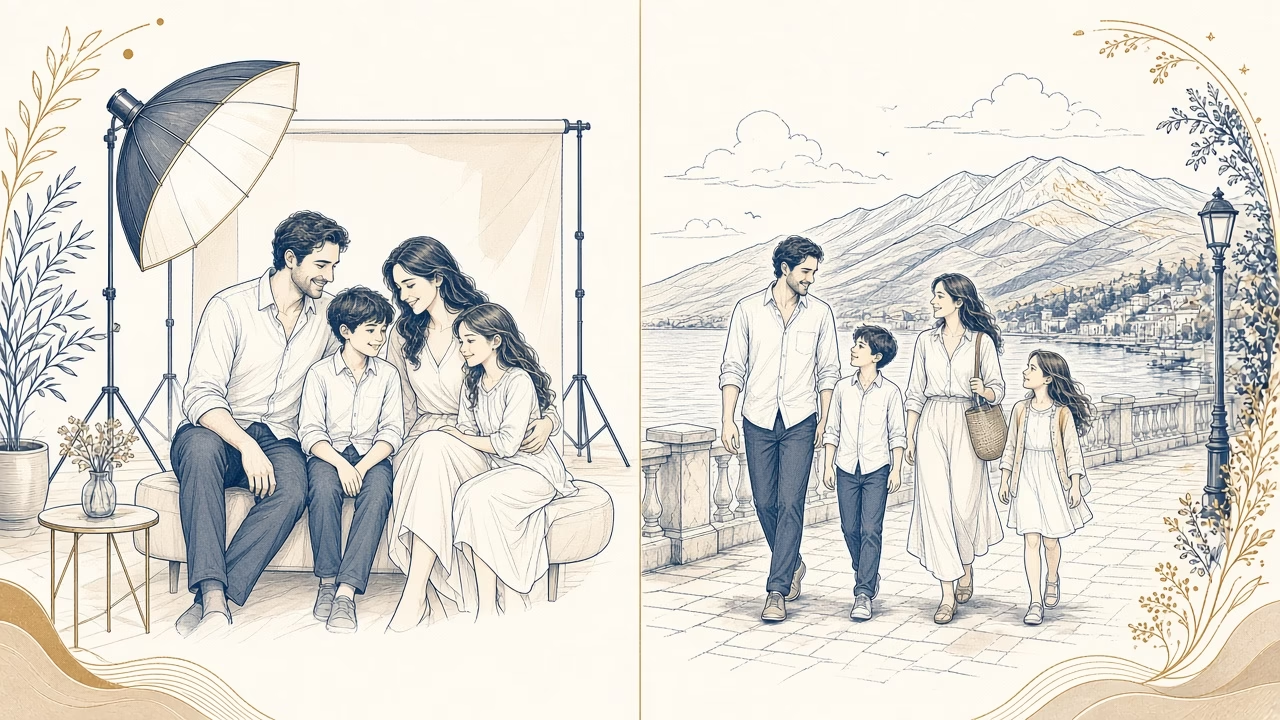
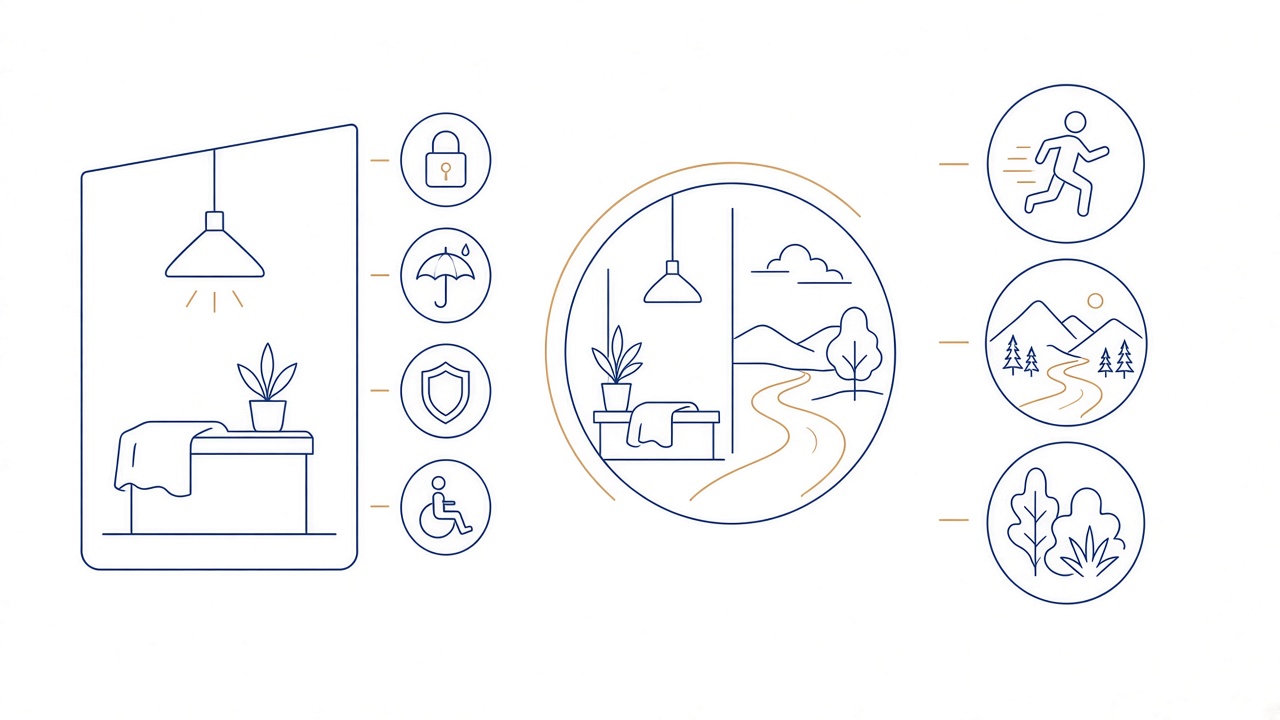
The question “studio or outdoors?” is not answered by visual preference alone. Light, weather, privacy, movement, access and temperament determine whether a setting works for everybody.
There is no universal winner
Studio and outdoors are not two levels of quality; they are different tools. The decision should connect visual style with how the family moves, privacy, access and tolerance for changing conditions. A group with a baby and grandparents has different priorities from parents whose children need continual movement. Starting from real needs rather than a striking sample makes the choice clearer. The same family may reasonably choose differently at another stage of life, so no single answer needs to become a permanent preference.
Light control and consistency in studio
Studio light can be repeated, softened and adjusted without depending on cloud or sunset. The background remains clean and colour can be controlled, useful for spare portraits centred on faces and gestures. Consistency also helps when frequent pauses are necessary. The result need not be formal; seats, cuddles, small games and movement can produce natural photographs inside an organised environment. Because distance and lighting are predictable, the photographer can move efficiently between full groups, smaller relationships and individual portraits.
Weather and changing light outdoors
Outdoors provides depth, natural texture and variation as the family walks. Sun, cloud, wind and temperature also change, and nobody can guarantee particular conditions. Hard midday light may require shade, whilst strong coastal wind can make a frame unpleasant. The plan needs sheltered points, sensible duration and an indoor alternative. Adapting to weather is part of exterior photography, not evidence of failure. Clothing should work for the actual temperature rather than being removed repeatedly to preserve a styling idea.
Privacy and distractions
Studio limits passers-by, unwanted attention and random noise, making clothing changes, feeding or a quiet pause easier. Outside, even a peaceful spot may gain people, bicycles or dogs. Some children enjoy those stimuli; others repeatedly lose connection. If the family does not want to be photographed publicly, do not rely on a popular place probably being empty. Choose a controlled interior or agree strict framing limits. Privacy also affects maternity feeding, disability-related care and any family member who simply dislikes an audience.
Movement and child temperament
Outside gives more room for running, exploring and play that organises energy. A child who feels constrained in an unfamiliar room may communicate more easily on an open route. Conversely, a child distracted by every sound may settle in the studio where stimuli can be reduced. Parents know everyday patterns and the photographer converts that knowledge into a sequence. A child is not “difficult” for needing another environment. Think about recovery too: can they pause quietly nearby after active movement, or will the location continue to stimulate them?
Accessibility beyond a ramp
Access includes parking, gradient, distance, stable ground, doors, seating, toilets and room for a pushchair or mobility aid. A landscape that appears easy in a photograph may require an uphill route or gravel crossing. Studio offers a more predictable journey when its actual features are confirmed. Assess an exterior through the needs of the participant requiring most support so nobody appears less because of location. Check whether an older relative can reach the exact photograph point, not merely the entrance to the wider site.
Differences in visual style
Studio usually means cleaner composition, controlled contrast and emphasis on form. Outdoors means the environment participates in the narrative: coast, town or nature occupies visible space. Either can be contemporary, enduring, joyful or quiet. Ask whether you mainly want to remember faces and relationships or a particular place as well. That answer is more useful than the vague label “natural”. Review complete galleries rather than one dramatic image, because consistency across group sizes reveals how a setting truly works.
When a hybrid approach works
A concise studio section and a few frames at a nearby outdoor point can add variety only when transition is simple. Define which is primary, which groups happen first and what will be omitted if energy falls. Hybrid does not mean two full sessions or a distant journey. For a large group, baby or person with limited mobility, one setting may produce a more coherent result. Panorama Studio has worked in Volos since 1989 with professional and family portraits, and can help weigh these practical differences before booking.
A concise decision method
Write down three non-negotiable needs, such as complete privacy, level access or freedom to move. Add two visual preferences, perhaps a clean background or visible landscape. First exclude any setting that fails practical needs, then compare style only among the remaining options. Ask for specifics rather than broad reassurance: how many metres the route covers, where the loo is and what happens if wind rises. This small process prevents an attractive reference image from outweighing the actual experience and helps every family member participate equally. It also reveals when one setting already satisfies enough priorities that a hybrid would add effort without useful variety.
Frequently asked questions
Does studio always have more flattering light?
It offers greater control, but suitable light depends on style, faces and how the space is used.
Can outdoor photography work under cloud?
Yes. Cloud often softens light when temperature, rain and safety remain manageable.
Where can we change clothes outdoors?
A change requires a suitable private place; otherwise one flexible outfit is preferable.
Which suits a child who runs continually?
A safe exterior may help when hazards are absent and movement becomes part of the photographs.
What should we check for a mobility aid?
Exact route, gradient, surface, doors, parking, turning room, seating and an accessible toilet.
Will studio portraits look staged?
Not necessarily. Genuine interaction and movement can happen with controlled light and a simple background.
Are outdoor photographs always more spontaneous?
No. Spontaneity depends on pace and rapport, whilst outside distractions may hinder some people.
What does a hybrid session really mean?
One principal environment plus a nearby complementary element with a short, easy transition.
Can the choice change at the last minute?
Safety or conditions may require adaptation according to availability and the agreed fallback.
How do we request guidance on choosing?
Send ages, mobility, privacy, child temperament and preferred style through the contact page.
Find the setting that serves your family
Send details about access, privacy, movement and your preferred style. Contact Panorama Studio.