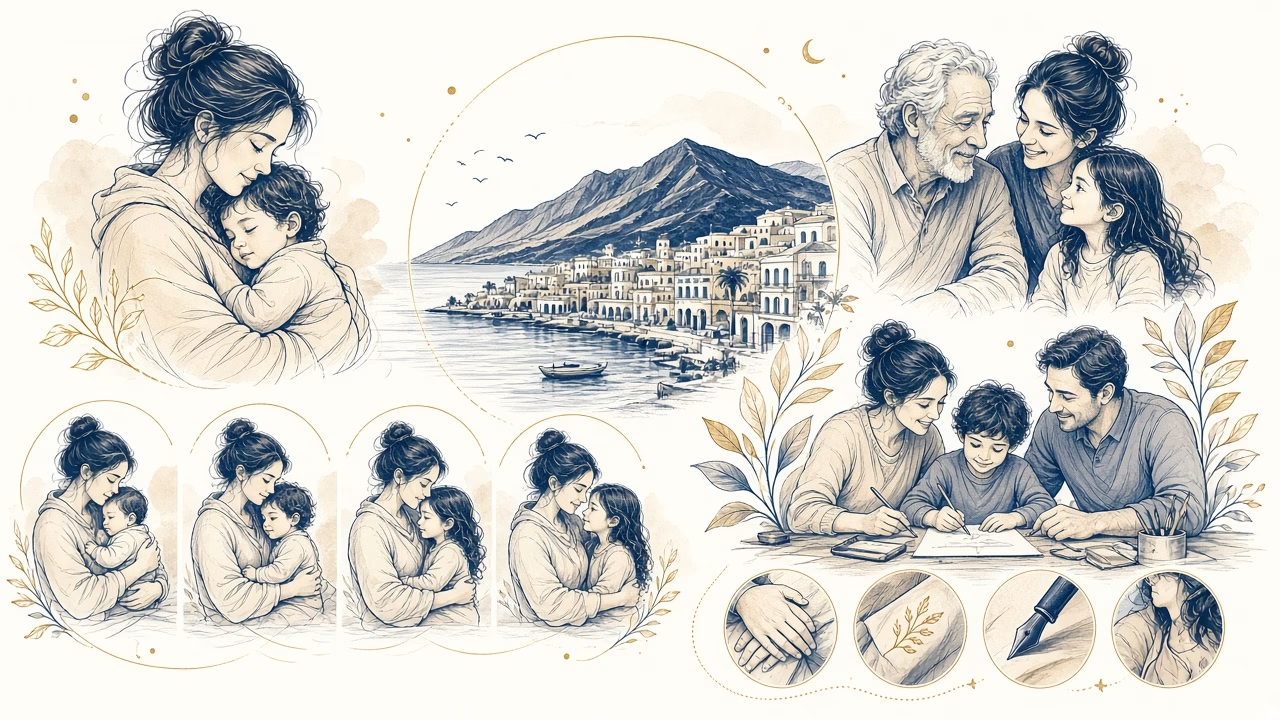
Meaningful family photographs do not require an elaborate set. They need a clear idea that helps people connect and makes room for faces as well as the small details of shared life.
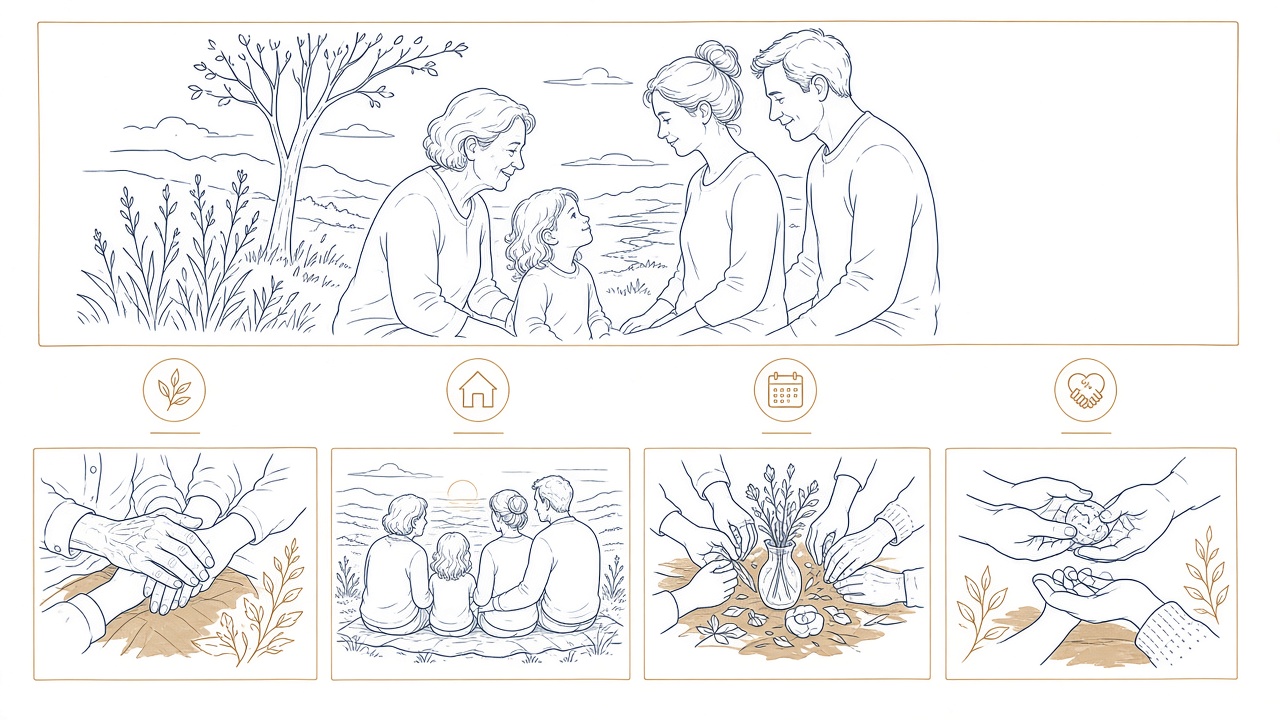
1. Everyday connection as it really happens
Instead of seeking an elaborate pose, begin with a simple routine: reading on the sofa, preparing breakfast, brushing hair or cuddling before a walk. Choose one activity everybody knows so nobody has to “play” themselves. The photographer can record the wider scene, faces, hands and small interruptions that reveal relationships. Remove only strong distractions and allow the home to remain recognisable. This idea derives its value from familiarity, not flawless decoration. Ordinary gestures often become more informative as children grow because they describe how family life once felt.
2. Generations in a clear family sequence
Photography with grandparents, parents and children needs organisation so smaller relationships are not missed. Begin with everybody whilst energy is available. Continue with each generation, grandparents and grandchildren, siblings, and any combination carrying particular importance. An old portrait or family object can provide a starting point without turning the session into themed theatre. Arrange seating, straightforward access and short pauses. Record names and relationships so final selection remains clear for relatives who were not present. Equal participation matters more than taking the group to a complicated scenic location.
3. A place belonging to your story
A first home, family courtyard, the neighbourhood where children are growing up or a favourite Volos route can provide meaningful context. Explain why the place matters so photographs show a relationship with it rather than merely attractive scenery. Check permission, privacy, light, terrain and access, then limit the plan to two or three nearby viewpoints. If the actual place is unsafe or unavailable, carry its story through an object, photograph or activity in a more practical setting. Respect neighbours and private property rather than treating emotional significance as automatic permission.
4. A yearly repeat that allows change
Choose one constant that is easy to repeat: the same chair, a place at home, a basic arrangement or a season. Do not pursue an exact copy. Changes in children’s height, expressions, relationships and interests are the real content. Record the date and names, organise files consistently and keep the process simple enough not to become an annual burden. If one year requires another setting, continuity can come from composition or a recurring gesture. A missed anniversary does not invalidate the series; resume when family life allows.
5. A shared activity and its details
Cooking, gardening, music, drawing, making or a board game gives hands a reason to move and people a reason to look at one another. Choose something already familiar, with few materials and no dangerous tools or pressure for a perfect outcome. Create photographs of the whole scene, smaller groups, faces and details such as a handwritten recipe, children’s fingers or a worn book. Details support portraits rather than replacing them. The activity provides a structure for connection, not a performance for the camera, and should remain simple enough for conversation.
Choosing one of the five ideas
Ask which story family members would recognise without an explanation. Then consider ages, time, setting, access and how many objects are genuinely required. One idea developed calmly usually produces a more coherent narrative than five rapid changes. A clear complete-group portrait can still sit inside any approach without abandoning natural action. Panorama Studio has created family photography and professional portraits in Volos since 1989, with planning that begins from the family’s own history rather than a standard prop list.
Caring for final images
Keep digital files in more than one organised location and periodically check that they open. Online Print may optionally be used for prints, whilst Online Photobook can produce a curated photographic book. These are ways to present and care for completed images, not session-booking tools. Handle prints with clean hands, choose suitable frames and avoid excessive humidity or prolonged direct light. No physical or digital format lasts indefinitely without appropriate care, migration and sensible copies.
A short list before beginning
After choosing the idea, write down who must appear together, which object is genuinely necessary and which photograph should be created early. Check that the activity suits all ages and that the setting permits safe movement, seating and privacy. Remove unnecessary materials instead of adding last-minute decoration. Allow a few unguided minutes because spontaneous relationships often appear between planned frames. Keep the list to one page and use it as a compass rather than a schedule that blocks a better real moment. If young children or older relatives are involved, put their essential combinations first and release them from waiting once those photographs are complete.
Frequently asked questions
Which idea suits a family that dislikes posing?
Everyday connection or a familiar activity gives a natural reason for movement and contact.
Must we clean the entire home?
No. Select one or two areas, removing only strong distractions or items exposing private information.
How is a three-generation portrait organised?
List groupings, begin with everybody, provide seating and reduce waiting for children and older relatives.
May we use an old family photograph?
Yes, as a narrative starting point without demanding exact replication of poses and expressions.
What makes a place genuinely meaningful?
Its connection to an experience, person or repeated routine, not simply popularity or beauty.
How do we keep an annual series consistent?
Repeat one simple element, record dates and allow clothes, expressions and relationships to change.
Which activity should we avoid?
Anything dangerous, overcomplicated, overwhelmingly messy or so demanding that relationships disappear.
Are details enough without a group portrait?
Details enrich the story, but a clear image of people keeps relationships legible.
Are prints and a photobook compulsory?
No. They are optional presentations of final images and need care just like digital files.
How do we discuss our own idea?
Use the contact page with the story, participants, ages, setting and possible dates.
Turn your own story into photographs
Describe the idea, people, place and possible dates. Contact Panorama Studio.