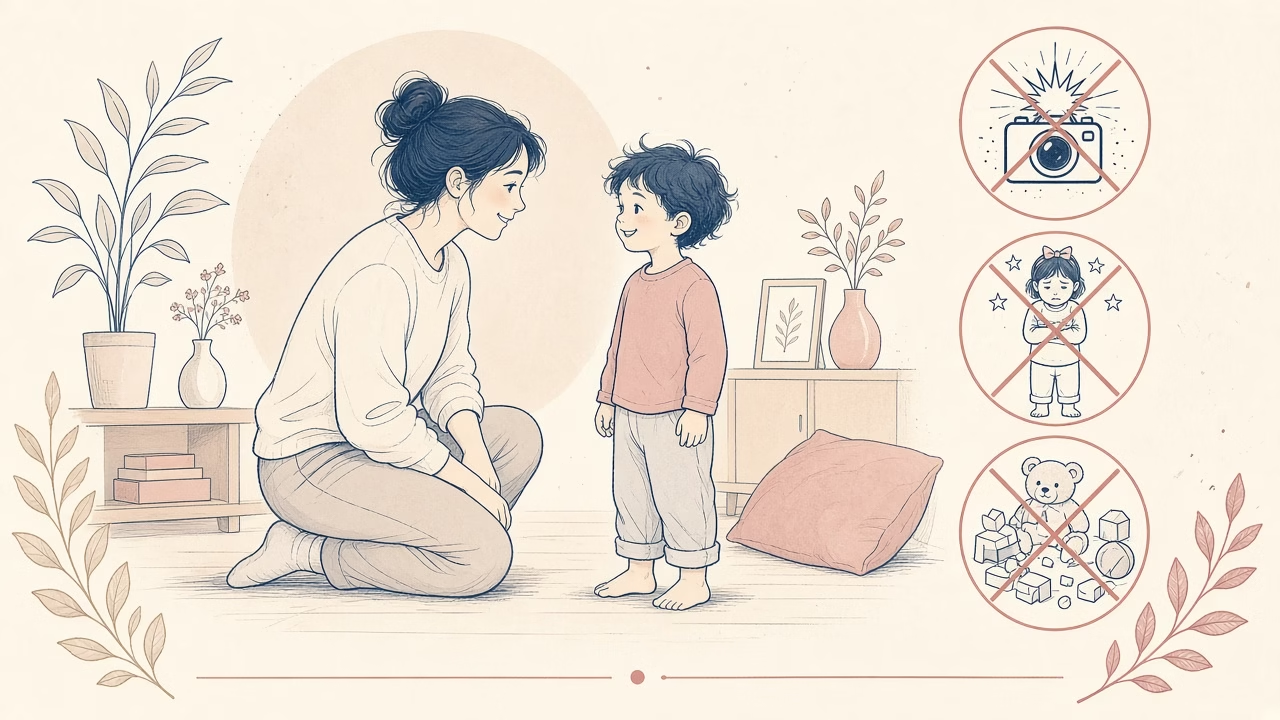
Strong photographs of children do not require an obedient model. They require an adult who watches, waits and knows when to put the phone down. The ten mistakes in this guide concern light, viewpoint and movement, but also safety, consent and privacy. No picture justifies fear, coercion or publishing a moment the child may later wish had remained within the family.
Ten practical steps
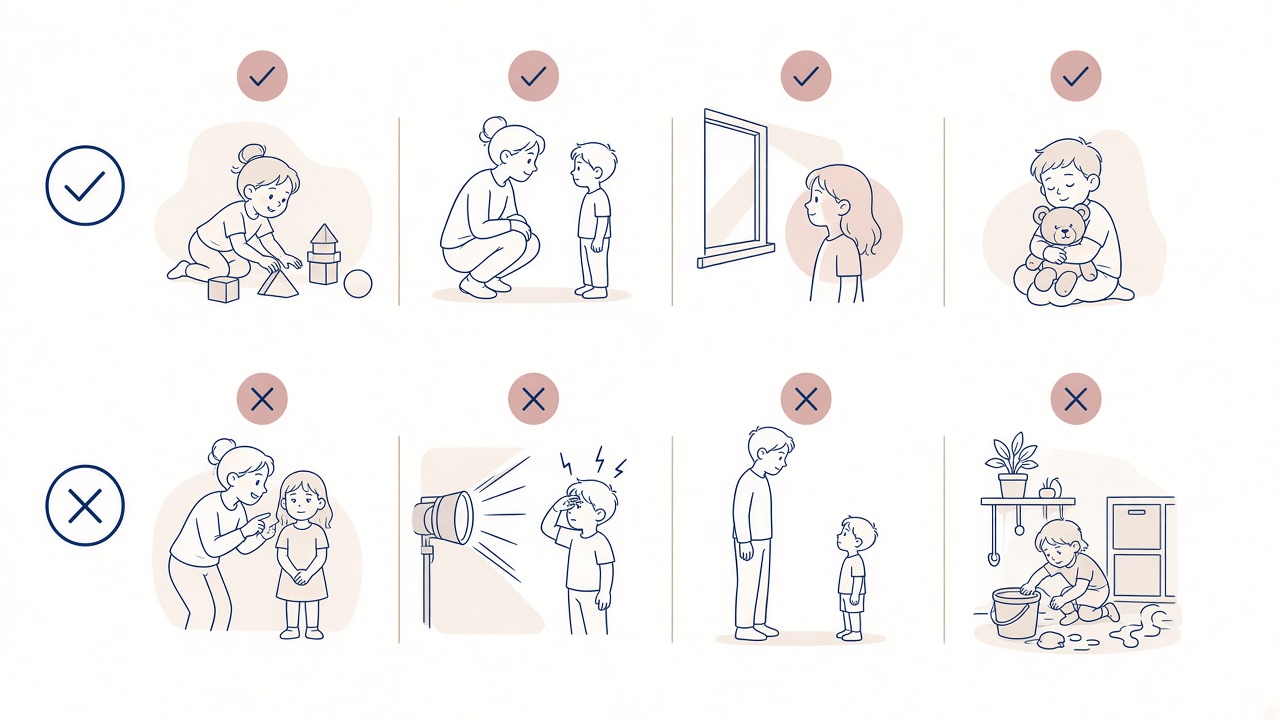
1. We force a pose
Repeated commands to smile create tension; prefer play, conversation and spontaneous reactions without pressure or reward. In practice, “1. We force a pose” should become a habit whilst the child moves and plays, not a last-minute repair. Notice what changes before and after the choice, then retain the version that serves the photograph clearly within “1. We force a pose”.
2. We always shoot from above
An adult viewpoint fills the frame with floor; get safely to eye level for a direct, equal perspective. The aim of “2. We always shoot from above” is not perfection but a dependable decision whilst the child moves and plays. If two options seem equal, favour the one retaining more information and leaving scope for future use within “2. We always shoot from above”.
3. We ignore the light
Harsh sun causes squinting and deep shadows; seek open shade or a window with gentle side light. Give “3. We ignore the light” particular attention whilst the child moves and plays, because small details are easily missed on a compact screen. A deliberate look at faces, edges and information prevents avoidable correction later within “3. We ignore the light”.
4. We focus behind the face
Tap the nearer eye on screen and inspect the result because bright background objects often mislead autofocus. For “4. We focus behind the face” to work whilst the child moves and plays, avoid bulk automatic choices when the material has personal value. Test one representative case and judge the actual result rather than trusting an application status alone within “4. We focus behind the face”.
5. We expect complete stillness
Use more light, a short burst and anticipation instead of interrupting the child’s natural movement. Consistency in “5. We expect complete stillness” is more useful than a complicated technique whilst the child moves and plays. Choose a rule you can remember, but allow exceptions when the story or safety of a particular picture demands one within “5. We expect complete stillness”.
6. We forget the background
Cables, signs and clutter compete with the face; change angle or move closer without staging the whole moment. If “6. We forget the background” feels difficult whilst the child moves and plays, divide the decision into observation, one small action and review. That order reduces haste and makes it easier to identify which change genuinely improved the outcome within “6. We forget the background”.
7. We crop carelessly
Check edges, hands and feet, avoid accidental cuts through joints and leave space in the direction of movement. Do not judge “7. We crop carelessly” only by the most striking example whilst the child moves and plays. Ask whether the same approach works for ordinary pictures and whether another person could understand it without extra explanation within “7. We crop carelessly”.
8. We put the picture before safety
Never position a child near traffic, water, heights or an animal for a better frame, and keep a responsible adult focused on supervision. “8. We put the picture before safety” still requires human judgement whilst the child moves and plays, even when a device offers an automatic answer. Technology can accelerate a task, but it cannot know which person, event or detail carries family meaning within “8. We put the picture before safety”.
9. We overlook consent and dignity
Explain in an age-appropriate way, listen to no, and do not preserve humiliating, nude or vulnerable moments that may hurt later. Before considering “9. We overlook consent and dignity” complete whilst the child moves and plays, view the result from the perspective of someone encountering it later. Will they understand the moment, receive enough information and feel the people were treated respectfully specifically for “9. We overlook consent and dignity”?
10. We share without checking privacy
Consider audience, location, school, name and daily routine before posting, and prefer limited private sharing. Finish “10. We share without checking privacy” with a deliberate final choice whilst the child moves and plays. Do not retain or share every variation by habit; a smaller considered set is easier to protect, retrieve and enjoy within “10. We share without checking privacy”.
A respect and safety check
- The child took part without pressure and could stop.
- The camera position created no risk for anyone.
- Light, viewpoint and background support rather than obscure expression.
- No humiliating or vulnerable moment is shown.
- Sharing reveals only what the chosen audience genuinely needs to know.
Frequently asked questions
What should I do when a child refuses to pose?
The practical answer is this: repeated commands to smile create tension; accept the refusal, leave the child free to continue playing and try again only if interest returns naturally.
Why does an eye-level viewpoint change the picture so much?
In this situation, an adult viewpoint fills the frame with floor; get safely to eye level for a direct, equal perspective.
How should I handle harsh sun in a playground?
As a safe starting point, harsh sun causes squinting and deep shadows; seek open shade or a window with gentle side light.
What is the safest way to capture clear movement?
To avoid a common mistake, tap the nearer eye on screen and inspect the result because bright background objects often mislead autofocus.
When does a photographic idea become unsafe?
In everyday use, use more light, a short burst and anticipation instead of interrupting the child’s natural movement.
How do we ask a young child for consent?
When the material has particular value, cables, signs and clutter compete with the face; change angle or move closer without staging the whole moment.
Should I keep an embarrassing but funny moment?
Before changing a setting, check edges, hands and feet, avoid accidental cuts through joints and leave space in the direction of movement.
What should be concealed before posting a photograph?
When comparing two options, never position a child near traffic, water, heights or an animal for a better frame, and keep a responsible adult focused on supervision.
May I upload a picture showing other children?
For a consistent result, explain in an age-appropriate way, listen to no, and do not preserve humiliating, nude or vulnerable moments that may hurt later.
When is it better to put the phone away completely?
The essential test is that: consider audience, location, school, name and daily routine before posting, and prefer limited private sharing.
Have you made a natural, respectful picture of a child that you would like to print for the family? Talk to Panorama Studio in Volos, working with photography since 1989 and ready to discuss “10 Mistakes We Make When Photographing Our Children”.