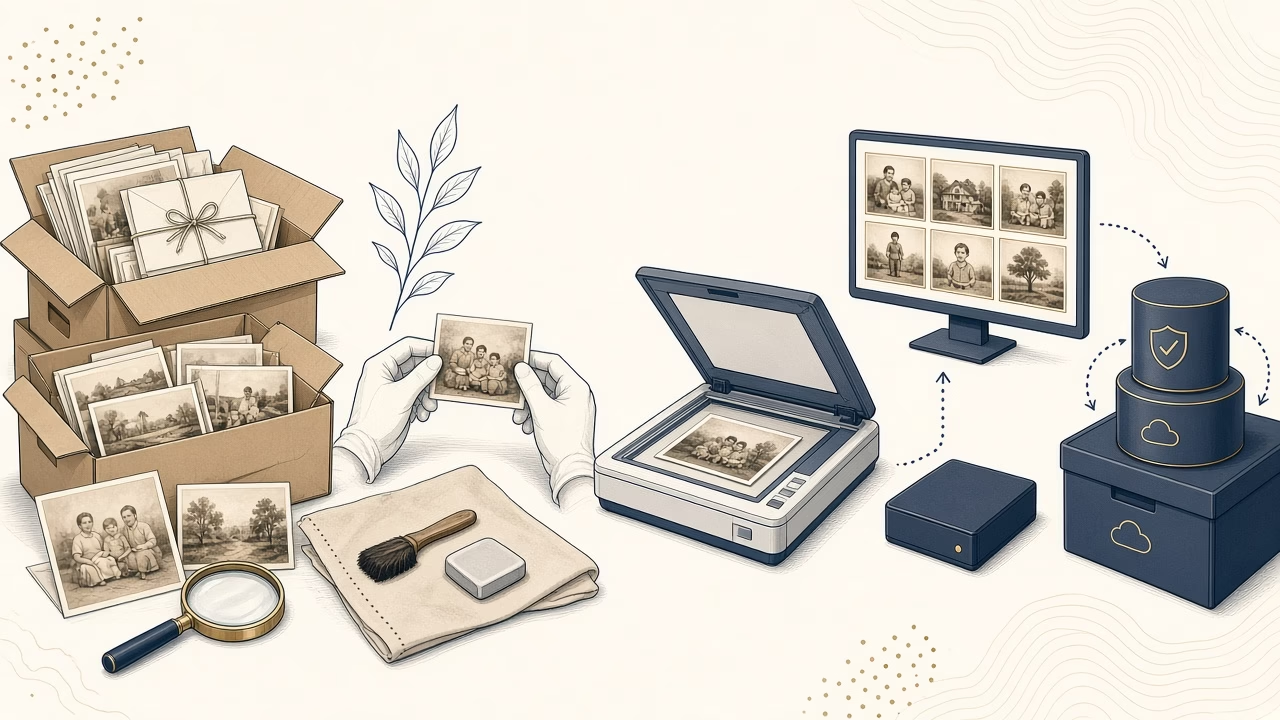
Scanning turns a physical photograph into a digital record that should remain useful. Panorama Studio has worked in Volos since 1989 and organises the process around careful handling, suitable resolution and consistent filenames.
If a physical copy is later required, the professional Fujifilm photo laboratory page describes the related printing service. Damage restoration is not automatically included with scanning and is assessed separately.
Safe handling
Only loose dust is removed by a safe method. Mould, flaking, stuck surfaces or severe curl are not subjected to aggressive cleaning. A fragile photograph may need another capture method instead of being pressed onto a flatbed scanner.
Choosing resolution
Resolution depends on physical dimensions, detail in the source and intended future use. A small photograph intended for enlargement needs different planning from a large print required only for screen viewing. Excessive settings create a larger file without creating new information.
Master and access copy
The master retains the greatest useful information, often in TIFF or another suitable format. A smaller JPEG is convenient for ordinary viewing and sharing. Keeping both versions protects the master from accidental editing or further compression.
Filenames and metadata
Photographs are numbered to preserve the order of an album or batch. Names, places, dates and events can be added when reliable information is supplied. An uncertain identification should be marked as uncertain rather than presented as fact.
Backups and delivery
Keep at least two copies on different media and another at a separate location or reliable service. Check periodically that the files still open. Working time depends on condition, quantity, resolution, metadata recording and the organisation required for each batch.
Organising a large batch
A large collection is divided by album, family or event before scanning begins. Temporary numbers connect each physical photograph with its digital file and help return every item to the original sequence. Where the reverse also needs capture, it is identified alongside the front image.
Frequently asked questions
Are photographs cleaned before scanning?
Only loose dust is removed by a safe method. Stains, mould, flaking or stuck surfaces are not subjected to aggressive cleaning without specialist assessment.
Which scanning resolution do I need?
Resolution is chosen from physical size, retained detail and intended use. A larger number cannot create image information absent from the source.
What is a master file?
It is the high-quality file retaining the greatest useful information with minimal or no loss. It is not necessarily intended for quick sharing.
Why should I have an access copy?
A smaller JPEG opens and shares easily without placing the larger master into everyday use. The two versions serve different purposes.
Which file format is appropriate?
TIFF or another suitable format may be selected for an archival master, while JPEG is often practical for access. Use and storage space guide the choice.
How are large batches named?
A pattern using sequence, album, date or family is agreed before the batch begins. Consistency matters more than an elaborate filename.
Can fragile photographs be scanned?
Yes, but curl, cracks, flaking and sensitivity to pressure are assessed first. Some items need a different capture method rather than a flatbed scanner.
Can metadata be added?
Basic details such as people, place, date or event can be added when reliable information is supplied. Uncertain information should be identified as such.
How many backups should I keep?
Keep at least two copies on different media and another at a separate location or reliable service. Check periodically that the files still open.
Is restoration included in scanning?
No. Scanning records the source as it is; damage removal, reconstruction or extensive tonal work is assessed and quoted separately.
Assessment: Scanning old photographs
Send the file or photographs of the source, together with dimensions, quantity, intended use and preferred deadline, through the contact page. The assessment of “Scanning old photographs” will cover suitable options and a realistic completion estimate.