Digital hotel presentation
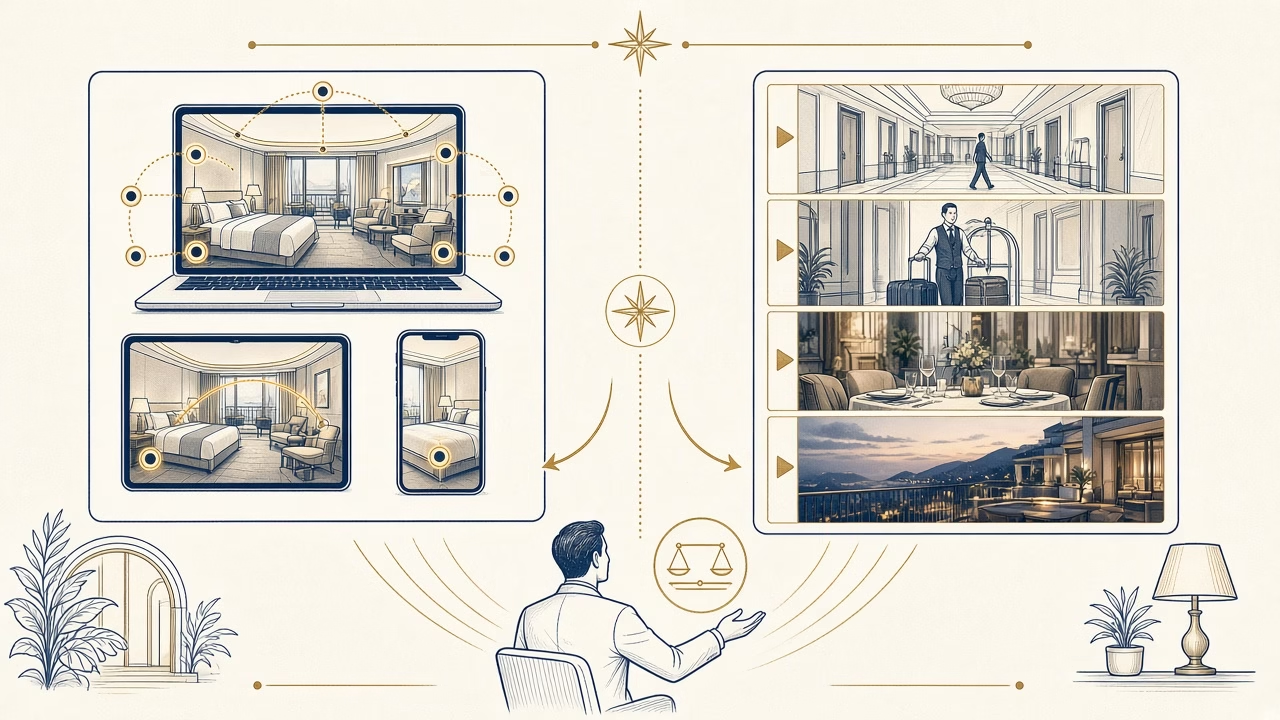
A virtual tour and a video are not two versions of the same product. The first gives viewers control over direction and the order of exploration. The second arranges imagery, movement, sound and duration into a defined narrative. The right choice begins with the communication goal, publishing channels and capacity to maintain the material—not with whichever technology looks more novel.
Virtual tour: navigation and spatial understanding
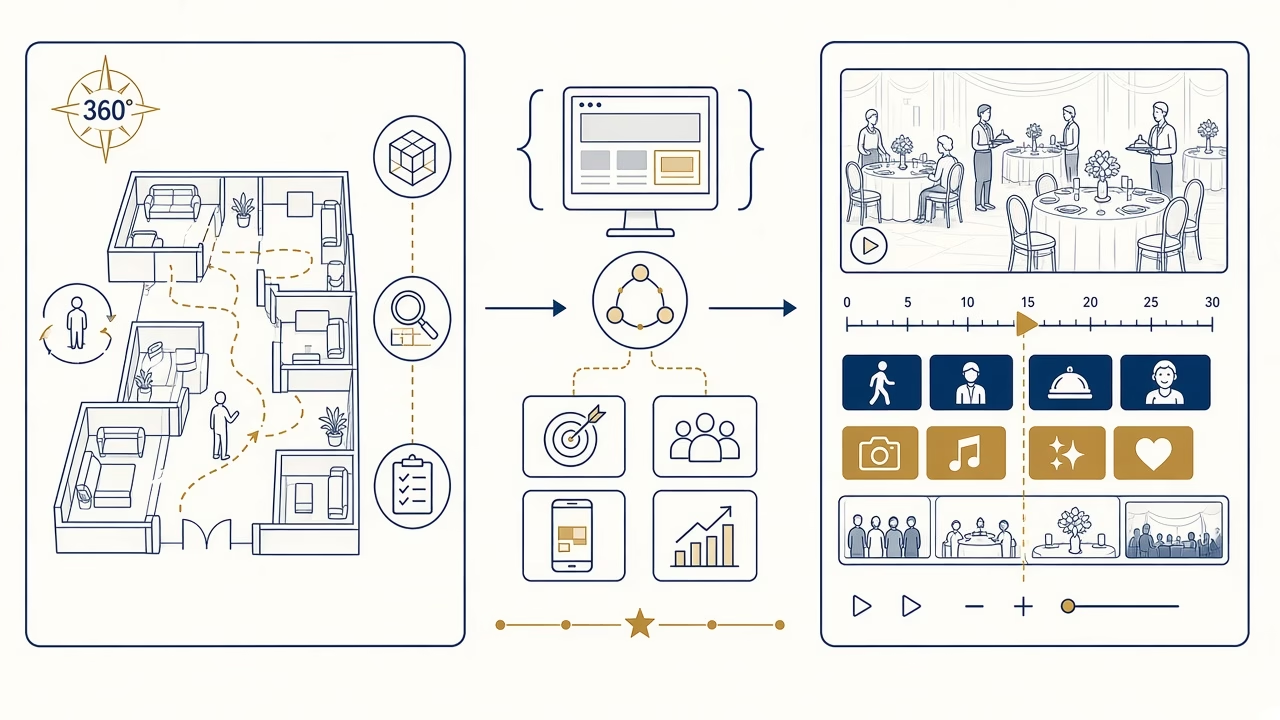
A 360° tour lets users look around a viewpoint and, when panoramas are connected, move between rooms or shared areas. It is useful when the main question is layout: how reception connects to the lounge, how a balcony relates to the bed, or where the pool sits in relation to the restaurant. Hotspots can add short details without overcrowding the image.
The viewer must still decide where to look. If the opening direction, transition points and instructions are unclear, important features may be missed and navigation can feel disorienting. A tour needs a simple structure, visible room names and a clear way back, especially on a phone.
Video: controlled narrative and emotion
Video defines pace and sequence. It can begin with arrival, move into a room, and show breakfast, activities and evening atmosphere within a short story. Human movement, natural sound and music can create an emotional context that a static panorama does not provide in the same manner.
That strength involves selection. A viewer cannot inspect every corner at their preferred pace, and an excessively fast walkthrough may conceal layout. The production needs a purposeful script, versions suited to different durations, and captions so the message remains available without sound.
Where will the material appear?
A hotel website can embed a tour or video player if its content management system, hosting provider and consent setup support it. Do not assume every booking engine or third-party platform accepts interactive content. Before production, ask the technical owner about allowed formats, embedding method, script restrictions and mobile behaviour.
For social channels, video is generally easier to adapt into short vertical and horizontal extracts. A virtual tour can be promoted through a link or teaser, while the complete interactive experience often lives on its own page. Platform capabilities change, so verify current technical requirements when publication is planned.
Speed, data and mobile experience
Multiple high-resolution panoramas and large video files can make a page slow. The answer is not simply poor image quality. Use considered compression, progressive loading, a poster image, suitable hosting and loading on user request. The main page should remain useful even if an interactive element takes longer to arrive.
Test on real devices and connections rather than only a fast office network. Check display time, touch controls and whether the close button stays visible. Provide a straightforward photo gallery and text as well, allowing visitors to obtain the essential information without loading the heaviest experience.
Privacy and production control
Schedule capture when spaces are controlled, without guests who have not agreed to appear, personal details on screens, vehicle plates or documents at reception. Because a 360° image records every direction, inspection must cover the complete sphere, not only the initial view. Staff should know where and when production is taking place.
Recognisable people in video require appropriate permissions and usage agreements based on the hotel’s professional advice. There is no responsible universal legal formula to invent here: obligations depend on location, use and contract. The hotel’s legal or privacy adviser should approve the process where required.
Content accessibility
A virtual tour needs controls that do not rely only on dragging, useful labels, a logical focus order and an alternative description of essential spaces. Video needs accurate captions, an informative description and review for intense flashes or unnecessarily rapid movement. Automatically generated captions are a starting point, not a finished accessibility check.
Do not treat a marketing tour as proof of a particular accessibility feature. If the hotel publishes measurements, routes or accessible-room equipment, verify them separately and present them with accurate photographs and text. Creative production does not replace a technical assessment.
Maintenance and useful life
A tour containing many spaces may require recapture when furniture, colours or room functions change. In a video, one change might be addressed by replacing a few shots, although a feature woven throughout the story could demand a new edit and music clearance. Before production, agree who maintains hosting, project files, links and the review date.
A modular production is easier to update. Separate scenes by room category and independent panoramas enable targeted replacement. Avoid seasonal props in long-term core material unless the hotel intentionally wants a seasonal campaign with a defined end date.
When a combination is useful
Many hotels can use a short central film for identity and selected 360° points where layout is important, such as a suite, event hall or spa. Every corridor does not need a panorama, and every amenity does not need its own film. The two formats should answer different questions rather than duplicate the same footage.
Evaluate with practical indicators: whether visitors launch the tour, complete the video, proceed to a room page or ask more specific questions. Those observations show engagement, not a guaranteed causal increase in bookings. Price, availability, reputation and demand remain influential.
A decision framework for the hotel team
Write one primary task for the asset. “Help event planners understand the ballroom and breakout-room relationship” points toward connected panoramas. “Introduce the hotel’s food, people and atmosphere in 45 seconds” points toward video. If the brief contains both, separate deliverables and budgets rather than asking one format to perform incompatible jobs.
Then audit available assets and ownership: current floor information, brand guidelines, music rights, approved copy, release forms, hosting accounts and staff time. A modest format that the team can publish and maintain is more valuable than an elaborate experience that goes offline or remains outdated.
Frequently asked questions
Which format explains layout better?
A connected 360° tour usually permits freer spatial exploration, provided transition points and room labels are clear and easy to use.
Which works better on social media?
Video adapts more readily to short formats, while a complete tour is commonly promoted with a teaser and external link.
Can a virtual tour appear on every platform?
Do not assume so. Support depends on the CMS, booking engine, third-party provider and current embedding policies.
Does hotel video need music?
Not always. If used, music needs suitable rights for agreed channels, and the message should remain understandable without sound.
Is 360° content heavy on mobile?
It can be when poorly optimised. Compression, progressive loading and an alternative gallery reduce its impact.
How is privacy protected?
Control each space, remove personal information and inspect the full sphere or every shot before anything is published.
What supports accessibility?
Captions and descriptions support video; labels and alternative navigation support tours; equivalent information should also exist in text and still images.
When should material be refreshed?
After a material change to spaces or services and during scheduled reviews, rather than because an arbitrary interval has elapsed.
Can a hotel use both formats?
Yes. A central video and a few strategic panoramas can address storytelling and layout without unnecessary duplication.
Do they guarantee more bookings?
No. They may improve presentation and understanding, but results cannot be separated from price, demand, availability and reputation.
The decision in one sentence
Choose 360° when visitors need to explore space, choose video when they need a guided story, and combine them when those are genuinely separate needs. Plan hosting, privacy, accessibility and future updates from the outset.
Follow us



360° Virtual Tours for your business
Want to design the right hotel presentation?
FotoPanorama produces 360° virtual tours, hotel video and commercial photography shaped around your spaces, publishing channels and realistic maintenance plan.